Top 10 Solar Companies in Ghana 2026: An Engineering Analysis
Discover the top 10 solar companies in Ghana for 2026 and learn the engineering behind high-performance solar installations for West African homes and businesses.
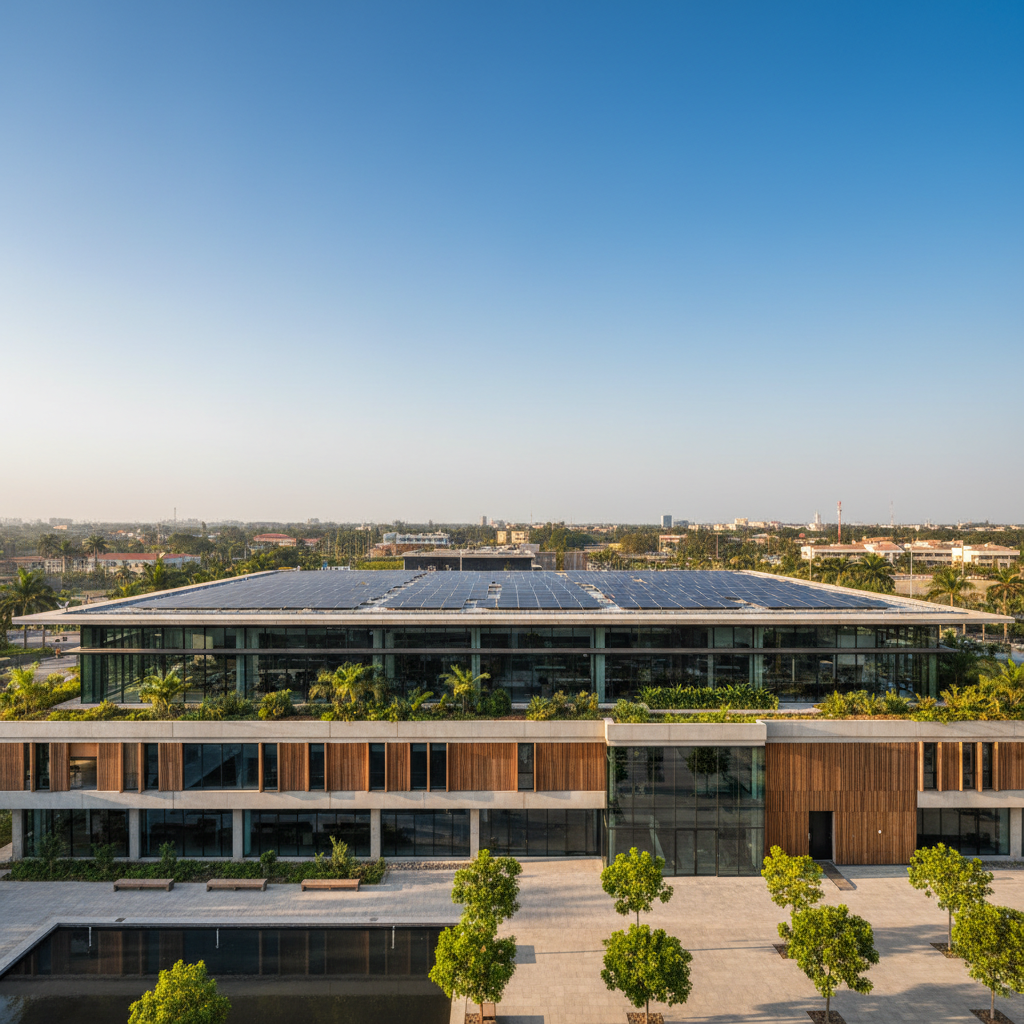
Why This Question Matters in Nigeria and Ghana Now
As we approach 2026, the energy landscape in West Africa is undergoing a radical shift. In Nigeria, the removal of fuel subsidies and the floating of the Naira have pushed the cost of running a diesel or PMS generator beyond the reach of the average SME. Simultaneously, in Ghana, the Electricity Company of Ghana (ECG) continues to grapple with infrastructure upgrades, leading to persistent 'dumsor' cycles.
Choosing from the top 10 solar companies in Ghana 2026 is no longer just about buying a product; it is about securing a 25-year energy asset. The market has matured, moving away from low-quality lead-acid batteries and unbranded modified sine wave inverters toward high-efficiency Lithium Iron Phosphate (LiFePO4) storage and Tier-1 monocrystalline PERC modules. According to the International Renewable Energy Agency (IRENA), the levelized cost of electricity (LCOE) for utility-scale solar has fallen by 89% since 2010, and we are seeing similar trends in the distributed generation sector across Accra and Kumasi.
By the numbers: According to the Energy Commission of Ghana, the country aims to increase the share of renewable energy in the generation mix to 10% by 2030, necessitating a massive influx of private sector engineering expertise. Source: Ghana Renewable Energy Master Plan.
Real-World Load Profile and Energy Consumption
Before engaging any of the top 10 solar companies in Ghana 2026, a client must understand their energy footprint. A common mistake is sizing a system based on 'number of rooms' rather than actual kilowatt-hour (kWh) consumption. In the West African context, cooling is the primary driver of demand. A standard three-bedroom home in Lagos or Accra with two inverter-type air conditioners requires a sophisticated power balance.
Below is a typical daily load profile for a residential customer utilizing a Gold Solar Bundle:
| Appliance | Wattage (W) | Quantity | Hours/Day | Total Daily Wh |
|---|---|---|---|---|
| LED Bulbs | 10 | 15 | 6 | 900 |
| Standing Fans | 60 | 4 | 10 | 2,400 |
| LED TV (55 inch) | 150 | 1 | 6 | 900 |
| Refrigerator (Inverter) | 200 | 1 | 24 | 4,800 |
| Inverter AC (1.5 HP) | 1,200 | 1 | 4 | 4,800 |
| Laptop/Electronics | 65 | 3 | 5 | 975 |
| Total Daily Consumption | 14,775 Wh (14.8 kWh) |
Inverter Sizing Math: kVA vs kW
The most critical engineering distinction the Maypatronic team makes is between kVA (Apparent Power) and kW (Real Power). Most budget inverters operate at a Power Factor (PF) of 0.8. If a company sells you a 5kVA inverter with a 0.8 PF, you only have 4kW of usable power.
Engineer's note — "At Maypatronic, we specify pure sine wave high-frequency inverters with a Power Factor of 1.0 for our premium installations. This ensures that a 5kW system delivers exactly 5,000 watts, accommodating the high inrush currents of compressor-based loads like refrigerators and water pumps without tripping the system." — Maypatronic Solar Engineering Team.
For the load profile above (14.8 kWh daily), a 5kVA/5kW inverter is the minimum requirement to handle the peak load (running the AC and fridge simultaneously). If the client plans to add a pumping machine or washing machine, we recommend scaling to an 8kVA or 10kVA unit available in our /shop.
LiFePO4 Battery Sizing and Depth of Discharge (DoD)
By 2026, lead-acid and AGM batteries will be obsolete for serious solar applications in West Africa. The heat in regions like Kano or Tamale degrades lead-acid plates rapidly. We exclusively utilize Lithium Iron Phosphate (LiFePO4) for our storage solutions.
When sizing storage, we must account for the Depth of Discharge (DoD) and Round-Trip Efficiency (RTE). While a lead-acid battery should only be discharged to 50% to maintain its lifespan, LiFePO4 can safely handle 80% to 95% DoD.
The Calculation: For a 14.8 kWh daily requirement, assuming 60% of that energy is consumed at night:
- Night Load: 14.8 kWh * 0.6 = 8.88 kWh.
- Required Storage (80% DoD): 8.88 / 0.8 = 11.1 kWh.
- Standardized Unit: Two 5.12kWh 48V Lithium modules (Total 10.24kWh) would be the baseline for a Gold Bundle.
By the numbers: The BloombergNEF battery price survey indicates that LiFePO4 battery pack prices have reached an all-time low of $139/kWh, making them more cost-effective over a 10-year cycle than any fossil fuel alternative. Source: BNEF 2023 Lithium-Ion Battery Price Survey.
Solar PV Array Sizing and Roof Footprint
In West Africa, we benefit from an average of 4.5 to 5.5 Peak Sun Hours (PSH). However, environmental factors like harmattan dust and high ambient temperatures (which reduce panel efficiency) must be derated in the engineering design.
To generate 14.8 kWh daily, we use the formula: Total Array Watts = (Daily Wh / PSH) / Efficiency Factor
Using a conservative 4.5 PSH and an efficiency factor of 0.8 (accounting for cable losses, dust, and heat): (14,800 / 4.5) / 0.8 = 4,111 Watts.
We would recommend 8 units of 550W Tier-1 Monocrystalline panels. Roof Footprint: Each 550W panel is roughly 2.3 square meters. 8 panels require approximately 18.4 square meters of unshaded roof space. Before installation, use our /estimator to check if your roof orientation (preferably South-facing at a 10-15 degree tilt) is optimal for maximum yield.
Indicative Cost Breakdown in NGN (Nigeria Context)
The following table represents the estimated investment for a high-performance system designed to last 15+ years. Prices are subject to exchange rate fluctuations between the Naira and USD.
| Component | Specification | Estimated Cost (NGN) |
|---|---|---|
| Hybrid Inverter | 5kW Pure Sine Wave (PF 1.0) | 850,000 - 1,200,000 |
| Battery Storage | 10.24kWh LiFePO4 (Wall-mount) | 2,800,000 - 3,500,000 |
| Solar Panels | 4.4kWp (8 x 550W Tier-1) | 1,100,000 - 1,400,000 |
| Balance of System | DC/AC Breakers, 16mm Cables, Racking | 400,000 - 600,000 |
| Installation & Logistics | Professional Engineering Fee | 250,000 - 400,000 |
| Total Estimated | 5,400,000 - 7,100,000 |
ROI vs Diesel Generator: The Economic Reality
The argument for solar is no longer environmental; it is purely mathematical. A 20kVA diesel generator consumes roughly 3.5 liters per hour under load. With diesel prices hovering between N1,200 and N1,500 per liter in Nigeria, the hourly running cost is approximately N4,200 to N5,250.
Engineer's note — "When you factor in oil changes every 200 hours, filter replacements, and the inevitable top-end overhaul every 5,000 hours, the 'hidden' cost of diesel power is nearly 40% higher than the fuel cost alone. Our clients typically see a complete Return on Investment (ROI) within 18 to 24 months when switching from diesel-primary to solar-primary configurations." — Maypatronic Solar Engineering Team.
Furthermore, according to the Nigerian Electricity Regulatory Commission (NERC), the transition to Multi-Year Tariff Order (MYTO) reflects the true cost of generation, meaning grid electricity prices for Band A customers will continue to rise. Solar provides a fixed-cost hedge against this inflation for the next two decades.
Installation, Warranty, and What Maypatronic Includes
When searching for the top 10 solar companies in Ghana 2026, warranty fulfillment is the greatest differentiator. Many installers provide 'equipment warranties' but vanish when a technical fault occurs. Maypatronic provides a comprehensive service level agreement (SLA) that covers:
- Remote Monitoring: All our systems include Wi-Fi logging, allowing our engineers to diagnose cell imbalances or inverter faults before the client even notices a power drop.
- Tiered Bundles: From our entry-level Bronze Bundle to our industrial Diamond Bundle, every component is selected for the West African climate.
- Surge Protection: Unlike standard installers, we include dedicated DC SPD (Surge Protective Devices) and Type 2 AC arrestors to protect against the frequent lightning strikes common in the Gulf of Guinea.
For businesses looking to transition, our /business section outlines PPA (Power Purchase Agreement) and lease-to-own models that preserve your working capital while slashing your OPEX. Contact our engineering team via the /contact page for a site-specific audit.
FAQ
Can I run my 1.5HP AC on a 5kW solar system?
Yes, provided you use an inverter-model AC. Conventional ACs have a high start-up surge that can be 3x the running wattage. A 5kW system can comfortably handle one inverter AC alongside other household loads, but we recommend our /bundles#silver or higher for multi-AC setups.
How does harmattan dust affect my solar production?
Dust can reduce efficiency by up to 30%. In Ghana and Nigeria, the peak harmattan months (December–February) coincide with high solar irradiance but also high dust levels. We recommend a simple water-only cleaning of the panels every two weeks during this period to maintain peak performance.
Why are Lithium batteries so much more expensive than Tubular batteries?
While the upfront cost is higher, Lithium (LiFePO4) batteries last for 4,000 to 6,000 cycles (approx. 10-15 years), whereas Tubular batteries rarely last beyond 2-3 years in heavy-cycle West African environments. On a 'cost per cycle' basis, Lithium is significantly cheaper.
Does Maypatronic offer financing for solar in Ghana?
We work with several financial partners to offer structured payments. The energy savings from reduced fuel consumption usually cover a significant portion of the monthly repayment. Check our blog for recent updates on green financing.
How do I choose between the Top 10 solar companies in Ghana 2026?
Look for engineering certifications, physical office presence, and the quality of their 'Balance of System' (cables, lugs, and breakers). A company that uses 'house wiring' for battery connections is a fire hazard. Always demand a single-line diagram (SLD) before the project starts.
Can I sell excess power back to the grid in Nigeria or Ghana?
While regulations are evolving via ESMAP supported programs, true 'Net Metering' is still in its infancy in West Africa. Currently, most systems are designed for 'Self-Consumption' with zero-export limiters to prevent feeding back into an unstable grid which could damage the inverter.
- Electrical servicesCertified installation & audits
- Scrap battery buy-backSame-day pickup + payment
- AI sizing estimatorkVA / kWh in 60 seconds
- Solar bundles5 pre-engineered tiers
- B2B solutionsCommercial & industrial
- Talk to an engineerFree consultation