7 Reasons Why Hybrid Inverters Are Better Than Traditional Inverters
Discover why modern hybrid inverters are replacing traditional setups in Nigeria. Learn how to optimize your solar ROI and beat rising DisCo tariffs.
Why This Question Matters in Nigeria Now
For the Nigerian homeowner or business operator, the electricity landscape has shifted from a mere inconvenience to a significant financial burden. Following the NERC Multi-Year Tariff Order (MYTO) reviews, Band A customers have seen rates surge, making grid reliance an expensive gamble. Simultaneously, the volatility of PMS and diesel prices—often exceeding 1,200 NGN per liter—has rendered traditional backup generators obsolete for long-term sustainability.
In this context, the choice of an inverter is no longer just about 'keeping the lights on'; it is about managing a complex microgrid. The transition from traditional non-hybrid (off-grid or grid-tie only) inverters to intelligent hybrid systems is the single most important upgrade for energy independence in West Africa.
By the numbers: According to BloombergNEF, the levelized cost of electricity (LCOE) for decentralized solar-plus-storage in Nigeria has fallen below the cost of diesel generation for the first time in history, reaching a tipping point for mass adoption.
Real-World Load Profile: Scaling Your Needs
Before diving into the technical superiority of hybrid systems, we must understand what we are powering. A typical middle-class Nigerian household or a small office (covered by our /bundles#gold package) requires a balance between comfort and efficiency.
| Appliance | Qty | Wattage (W) | Hourly Consumption (Wh) | Priority |
|---|---|---|---|---|
| LED Lighting | 15 | 10 | 150 | Critical |
| Inverter Refrigerator | 1 | 150 | 150 | Critical |
| 55" Smart TV | 1 | 120 | 120 | Essential |
| Laptop/Router | 3 | 60 | 180 | Essential |
| Standing Fans | 4 | 75 | 300 | Essential |
| 1.5 HP Inverter AC | 1 | 1,200 | 1,200 | Comfort |
| Total Continuous Load | 2,100 W |
Traditional inverters often struggle with the dynamic nature of this load, particularly the surge currents from compressors. A hybrid system manages these transitions seamlessly.
1. Integrated Power Management Units (PMU)
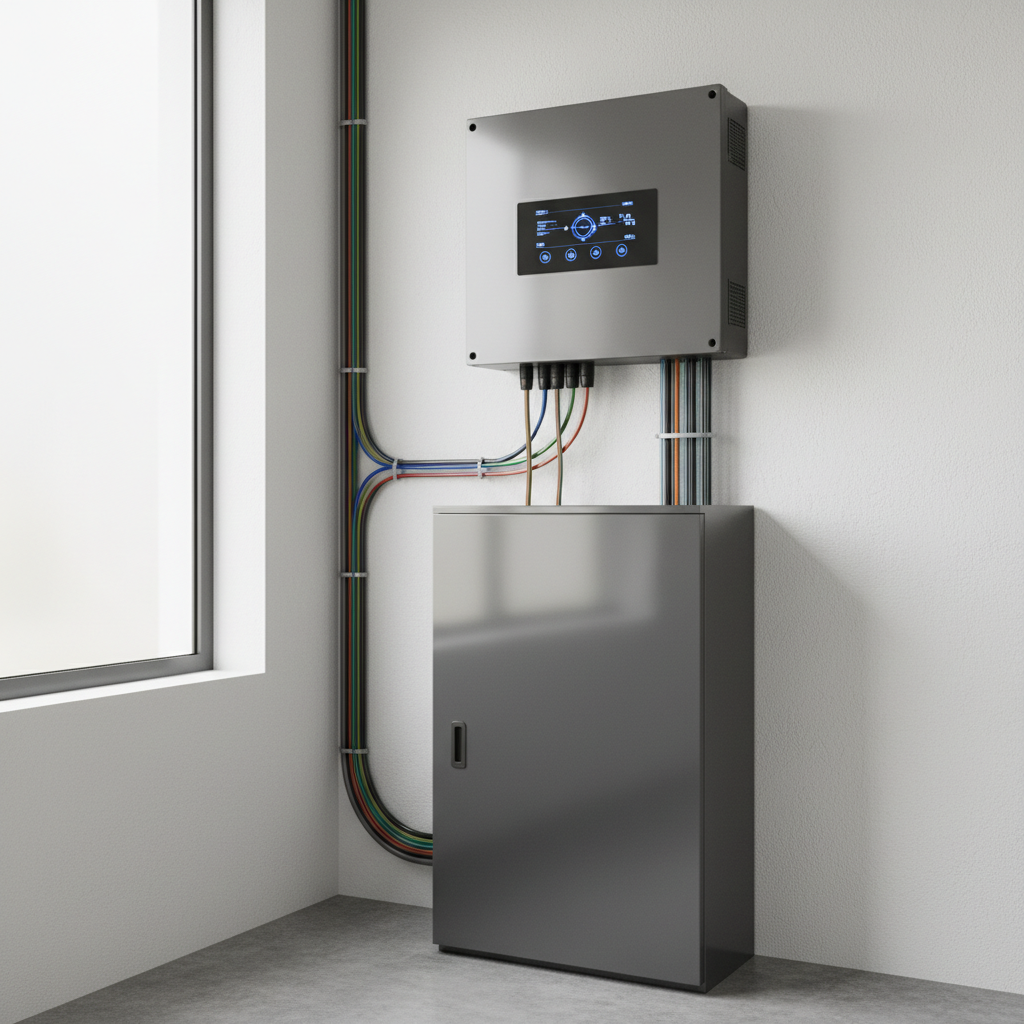
Traditional inverters are singular in their function. An off-grid inverter converts DC to AC; a grid-tie inverter pushes power to the grid. A hybrid inverter is a multi-modal processor. It integrates a solar charge controller (MPPT), a grid charger, and an inverter into one chassis.
In the Nigerian context, this means the unit can simultaneously draw 2kW from your solar panels, 1kW from the EKEDP grid, and use both to power a 3kW load while keeping the batteries topped up. Traditional systems require external charge controllers, leading to 'communication lag' between components and higher failure rates due to complex wiring.
2. Advanced Grid Interaction and 'Self-Consumption'
One of the primary '7 reasons why hybrid inverters are better' is their ability to prioritize energy sources. In Nigeria, where grid power is intermittent but relatively cheaper than battery cycles during the day, a hybrid inverter can be programmed for 'Self-Consumption' mode.
This mode ensures that solar power is used first to power loads, then to charge batteries. Only when solar is insufficient does it pull from the grid. Traditional off-grid inverters often disconnect from the grid entirely to use battery power, even when the sun is shining, leading to unnecessary battery wear.
3. Inverter Sizing Math: kVA vs. kW
Engineering precision is vital. Many traditional inverters are marketed in kVA (Apparent Power), but your appliances consume kW (Real Power). The Power Factor (PF) is the bridge between the two.
Engineer's note — Maypatronic Solar Engineering Team: "Always check the Power Factor of your inverter. A traditional 5kVA inverter with a 0.8 PF only provides 4kW of real power. Most modern hybrid inverters, like those in our /bundles range, operate at a 1.0 PF (Unity Power Factor), meaning a 5kW hybrid actually delivers 5,000W of usable energy. This 20% difference is the margin between your AC starting smoothly or the system tripping on overload."
4. LiFePO4 Battery Optimization and Longevity
Hybrid inverters are designed for Lithium Iron Phosphate (LiFePO4) chemistry. Unlike traditional lead-acid or gel batteries that require a simple bulk/float charge, LiFePO4 batteries need a Battery Management System (BMS) that communicates directly with the inverter via CAN or RS485 protocols.
By the numbers: IRENA reports that while LiFePO4 batteries have a higher upfront cost, they offer up to 6,000 cycles at 80% Depth of Discharge (DoD), compared to just 500-800 cycles for deep-cycle gel batteries. Hybrid inverters protect this investment by preventing over-discharge through precise voltage cut-offs.
Traditional inverters lack these communication ports, often 'guessing' the state of charge based on voltage alone. This leads to premature battery failure in the Nigerian climate where high ambient temperatures already stress the cells. You can calculate your specific needs using our /estimator tool.
5. Solar PV Array Sizing and Roof Footprint
Efficiency in Nigeria is hampered by Harmattan dust and high heat coefficients. A hybrid inverter typically features high-voltage MPPT trackers (up to 450V-500V DC). This allows for longer 'strings' of solar panels.
| Feature | Traditional PWM/Off-Grid | Modern Hybrid (MPPT) |
|---|---|---|
| Max Input Voltage | 60V - 145V | 450V - 500V |
| Efficiency | 70-80% | 97-99% |
| Wiring Complexity | High (Parallel strings) | Low (Series strings) |
| Low Light Performance | Poor | Excellent |
With an average of 4.5 Peak Sun Hours (PSH) in Lagos and up to 6.0 PSH in Kano (data via NIMET), a hybrid inverter extracts more Watt-hours from the same roof footprint. This is essential for urban homes with limited roof space.
6. Real-time Monitoring and Remote Troubleshooting
In the era of the Internet of Things (IoT), a traditional inverter is a 'black box.' When it fails, you are left in the dark. Hybrid inverters come with Wi-Fi or GPRS modules that upload data to the cloud.
At Maypatronic, our technical team can often diagnose a configuration error in a client's /business setup remotely. We monitor parameters like PV input, battery temperature, and load spikes. In a country like Nigeria where qualified field engineers are spread thin, remote diagnostics save days of downtime.
7. Scalability and Future-Proofing (ROI vs Diesel)
The 7th reason is financial flexibility. Traditional systems are rigid; if you want to add more panels or batteries later, you often have to replace the whole unit. Hybrid systems are modular. Many models allow for 'paralleling,' where you can link up to 6-9 inverters as your energy needs grow.
Engineer's note — Maypatronic Solar Engineering Team: "When calculating ROI, don't just look at the hardware cost. A 5kW hybrid system replaces a 10kVA diesel generator. At current NGN prices, the savings on fuel and servicing alone usually pay for the solar system within 18 to 24 months. Furthermore, with the ESMAP initiatives pushing for mini-grids, having a hybrid system ensures you are ready for future net-metering policies where you can sell excess power back to the DisCo."
Indicative Cost Breakdown in NGN
For a standard Gold Bundle (5kVA/5kW System), the investment reflects the quality of components required to survive the Nigerian environment.
| Component | Specification | Estimated Cost (NGN) |
|---|---|---|
| Hybrid Inverter | 5kW Pure Sine Wave (Unity PF) | 850,000 - 1,200,000 |
| Lithium Battery | 5.12kWh LiFePO4 (100Ah) | 1,400,000 - 1,800,000 |
| Solar Panels | 6 x 550W Tier 1 Mono-Perc | 900,000 - 1,100,000 |
| Protection Gear | DC/AC Surge Protectors & Breakers | 150,000 - 250,000 |
| Installation | Rails, Cables, Labor | 300,000 - 450,000 |
Note: Prices fluctuate based on exchange rates and specific site requirements.
Installation, Warranty, and the Maypatronic Advantage
Buying a hybrid inverter is half the battle; proper installation is the other half. In Nigeria, poor earthing and 'leaky' neutral wires are common causes of inverter failure. Every Maypatronic installation includes a comprehensive site audit to ensure your building's wiring can handle the sophisticated switching of a hybrid system.
We offer industry-leading warranties on our /bundles, ensuring that your transition to clean energy is risk-free. If you are ready to stop burning money on diesel and start harvesting the sun, /contact our engineering team today for a bespoke quote.
FAQ
Can a hybrid inverter work without batteries?
Yes, most modern hybrid inverters can operate in 'battery-less' mode during the day, using solar power directly to run your loads. However, in Nigeria, we recommend at least a small lithium bank to buffer against cloud cover and provide backup during grid outages at night.
What is the difference between a hybrid and an off-grid inverter?
An off-grid inverter is designed to work independently of the grid, usually requiring batteries at all times. A hybrid inverter can stay connected to the grid, solar, and batteries simultaneously, intelligently choosing the cheapest or most stable source at any given millisecond.
How does Harmattan affect my hybrid system?
Dust accumulation on panels can reduce efficiency by up to 30%. While the hybrid inverter's MPPT will try to compensate by finding the new maximum power point, we recommend physical cleaning of the panels every 2 weeks during the peak Harmattan season (December–February).
Is a hybrid inverter compatible with my old Gel batteries?
Yes, most hybrids allow you to select the battery type (Lead-Acid/Gel/Lithium). However, you will not benefit from the advanced communication features (BMS) that Lithium batteries offer, and the ROI will be slower due to the shorter lifespan of Gel batteries.
Will a 5kW hybrid inverter run my AC?
Absolutely. A 5kW hybrid inverter with a high surge capacity (usually 2x its rated power for 5 seconds) can easily start a 1.5HP inverter-type air conditioner. We recommend inverter ACs because they lack the massive 'inrush current' of older non-inverter models.
How long does installation take?
For a standard residential /bundles#gold setup, our team typically completes the physical installation and commissioning within 48 to 72 hours, depending on the complexity of your roof and distribution board.
- Electrical servicesCertified installation & audits
- Scrap battery buy-backSame-day pickup + payment
- AI sizing estimatorkVA / kWh in 60 seconds
- Solar bundles5 pre-engineered tiers
- B2B solutionsCommercial & industrial
- Talk to an engineerFree consultation