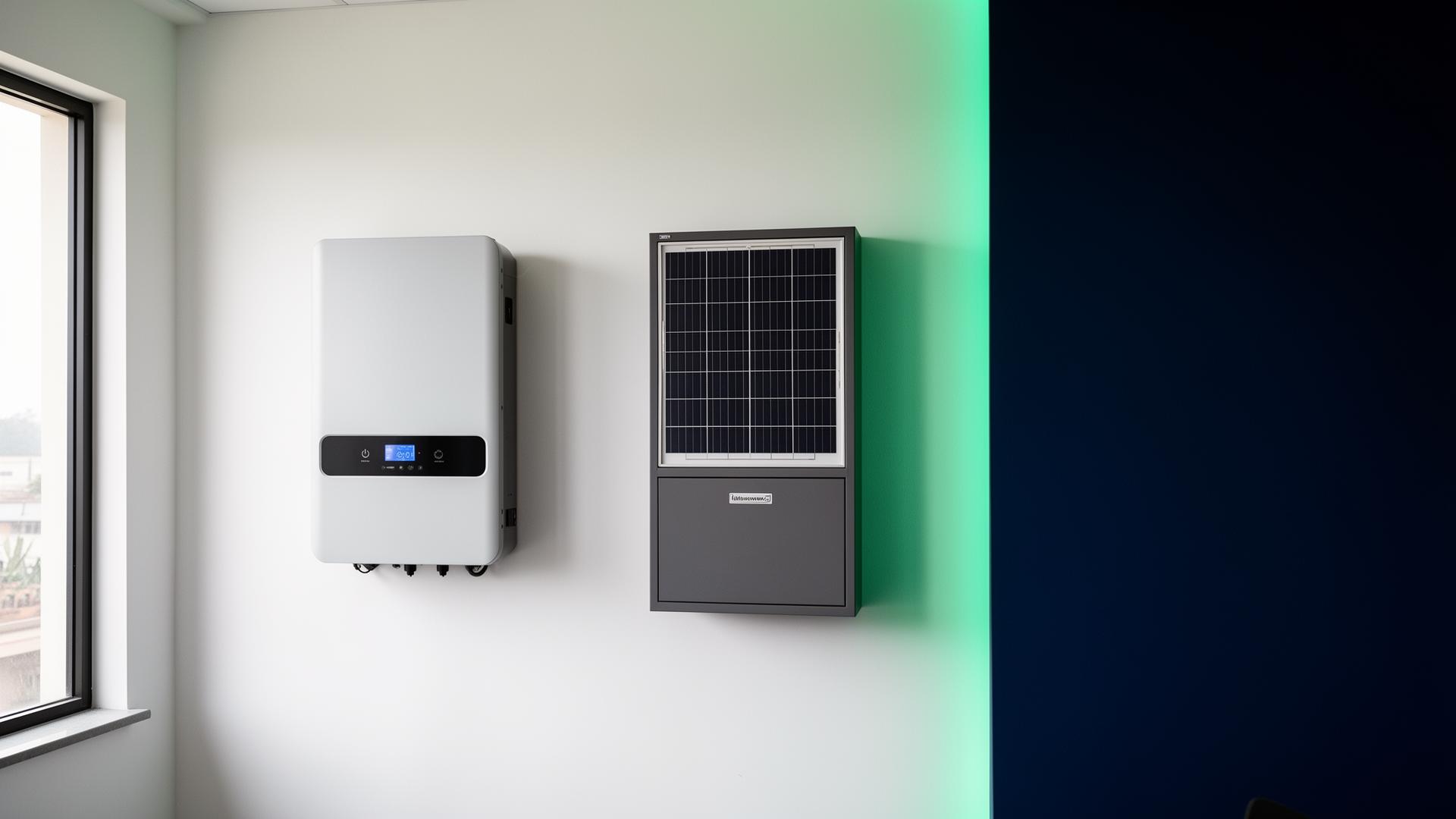
Solar power designed for the way Ghanaian homes and businesses operate
Choosing a solar company in Ghana is not simply a shopping decision. It is an infrastructure decision about which parts of your property must remain productive when public power is unavailable, how much electricity you want the sun to provide, and how confidently the system should support tomorrow's loads as well as today's. Maypatronic approaches that decision from the load outward. We identify what must run, when it runs, how much starting power it demands and how long backup should last before recommending equipment.
That method matters because two properties that both request a “5 kVA solar system” may need completely different designs. One household may prioritise lighting, internet, televisions, refrigeration and an inverter air conditioner overnight. Another may add a borehole pump, electric iron, kettle and several air conditioners at the same time. A pharmacy may protect refrigeration and point-of-sale equipment, while a school needs daytime production for computers, fans and administration. The inverter label alone cannot answer those questions; peak demand, surge current and daily energy in kilowatt-hours can.
Our Ghana solar service brings together hybrid inverters, monocrystalline panels, LiFePO4 batteries, mounting, protection, cabling, distribution-board integration and commissioning as one designed system. Homeowners can begin by comparing our complete solar bundles or using the solar sizing estimator. Businesses with compressors, three-phase loads or long operating hours should review our commercial solar solutions and request a measured assessment.
What we deliver
One accountable solar partner from assessment to support
Residential solar systems
Quiet backup and daytime solar for apartments, family houses and larger residences. We separate essential and heavy loads, then balance inverter capacity, battery autonomy and roof space around how your household actually uses power.
Commercial and SME solar
Power continuity for offices, clinics, pharmacies, schools, retail, hospitality, workshops and cold-chain operations. Designs can prioritise critical circuits while leaving unusually heavy equipment on grid or generator support.
LiFePO4 battery storage
Modern lithium iron phosphate storage with an integrated battery management system. Correctly matched storage delivers quieter operation, useful depth of discharge and more predictable daily cycling than a poorly sized legacy battery bank.
Installation and aftercare
From the first load schedule to commissioning, handover and maintenance planning, the system is treated as electrical infrastructure rather than a collection of boxes. Existing wiring and changeover arrangements are reviewed before connection.
Why solar makes practical sense in Ghana
Ghana's electricity system supports homes, commerce and industry every day, but individual customers can still experience interruptions, voltage events and changing utility costs. Weather and network work can affect supply in different communities at different times. Solar does not need to be framed as a rejection of the grid. A well-designed hybrid system makes the grid one useful input among several: solar can carry daytime demand, batteries can bridge interruptions and the grid can recharge or support loads when conditions require it.
For a household, that can mean quiet evenings, stable internet for remote work, protected refrigeration and fewer decisions about which appliance to unplug. For a business, continuity has a measurable operational value. A clinic protects temperature-sensitive supplies and records. A retailer keeps lights, payment devices and security online. A cold-room operator manages product risk. A professional office protects staff time and customer service. The correct financial question is therefore broader than “How many cedis does solar save?” It is also “What does an hour without power cost this property?”
Ghana also has a formal framework for renewable-energy interconnection. The Energy Commission's Net Metering Code describes requirements for connecting renewable generating systems to a distribution network. Net metering should never be assumed at quotation stage: eligibility, approvals, equipment and current commercial arrangements need confirmation for the exact site. Customers mainly seeking outage protection may be better served by a battery-backed hybrid design whose value does not depend on exported energy.
Power quality matters as much as backup time
A battery is not the only protection a property needs. The design should consider earthing, surge protection, breaker coordination, cable sizing, changeover logic, neutral arrangements and the condition of the distribution board. Sensitive electronics can be exposed by weak existing wiring even when premium solar equipment is installed. Where remedial work is required, our electrical services pages explain the wider installation and safety scope available in Ghana, including dedicated coverage for East Legon, Cantonments and other Accra communities.
How we size a solar system in Ghana
Good sizing separates power from energy. Inverter capacity determines how much equipment can run at once and whether motors can start. Battery capacity determines how long selected loads can run without adequate solar or grid supply. Panel capacity determines how much energy can be harvested during useful daylight, subject to weather, orientation, heat, dust and shading.
| Design question | What it determines | What we check |
|---|---|---|
| What runs together? | Inverter continuous rating | Appliance watts, diversity and operating habits |
| What has a motor? | Surge headroom | Pumps, compressors, fridges and air conditioners |
| How long must backup last? | Usable battery capacity | Night use, outage goal and acceptable reserve |
| How much roof is productive? | Solar-array capacity | Orientation, shading, structure and cable route |
| Which loads are critical? | Circuit architecture | Essential-load board and load-control strategy |
A compact apartment focused on lights, internet, entertainment and refrigeration may use a smaller inverter and battery than a family house with water pumping and cooling. A business operating primarily in daylight may invest more in panels and less in overnight storage than a residence. Review transparent examples on our solar price hub, including 5 kVA solar pricing in Accra, 10 kVA systems in Accra and 5 kVA systems in Kumasi. These are planning references; the final proposal follows the property.
The cheapest quotation is not always the lowest-cost system
A quote can look attractive because it hides usable battery capacity, removes protection equipment, assumes no surge loads or excludes essential installation work. Ask each supplier to state the same measurable items. Compare inverter continuous and surge ratings, battery chemistry and usable kilowatt-hours, panel wattage, mounting specification, breakers and surge protection, cable scope, monitoring, commissioning, warranty ownership and exclusions. When the assumptions are visible, price becomes much easier to judge.
Residential solar for comfort, work and everyday resilience
Home solar should reduce friction without forcing the family to become power engineers. The system should make essential circuits obvious, provide sensible monitoring and avoid nuisance trips during normal use. We begin by discussing the household's priorities. Some clients care most about an uninterrupted night: lighting, fans, refrigeration, security, internet and selected sockets. Others want daytime air conditioning, water pumping or support for a home office. Those priorities change the right balance between panels and storage.
Load discipline can improve value without reducing comfort. Inverter air conditioners, efficient refrigeration and LED lighting reduce daily energy demand. High-heat appliances such as kettles, irons and electric cookers can be scheduled when solar production is strongest or kept outside the backup circuit. A borehole pump can run in a planned daytime window rather than competing with cooling overnight. The goal is not to forbid appliances; it is to assign expensive stored energy where it produces the most benefit.
For customers comparing equipment before an assessment, the Maypatronic shop covers solar generators, batteries, hybrid inverters, panels and related hardware. Complete packages are shown on the solar bundles page. A package is a useful starting point, but roof conditions, wiring and usage determine whether it is a safe final fit.
Commercial solar that protects operations
Business systems require a different conversation. A salon has dryers and cooling. A pharmacy may prioritise refrigeration and security. A school or church may carry many fans and lights for concentrated periods. A cold room has compressor starting currents and temperature risk. An office combines computers, networking, printing, lighting and air conditioning. Treating each as “just a 10 kVA system” can lead to poor performance or wasted investment.
Our commercial assessment maps critical, deferrable and excluded loads. Critical circuits receive the highest continuity priority. Deferrable loads can operate when solar production or the grid is available. Loads that are inefficient to support from batteries may remain on a separate circuit or use controlled generator backup. Where records permit, consumption patterns and operating hours help build a more defensible energy model. The proposal can then describe a staged path: protect essential operations now and add battery or solar capacity later without replacing the core design.
This approach is especially valuable for organisations evaluating return on investment. Savings vary with tariffs, fuel costs, daytime self-consumption, maintenance, financing and equipment utilisation, so we do not promise one universal payback period. Instead, decision-makers can compare assumptions and test scenarios. Visit solar for business for solution categories or contact Maypatronic to discuss a facility assessment.
Delivery method
From first message to a commissioned system
01
Share your power needs
Tell us your location, property type, appliances, operating hours and current power problem. Photos of the distribution board and a recent electricity bill help the first review.
02
Load and site assessment
We identify continuous loads, starting surges, critical circuits, available roof area, shading, cable routes and the role the grid or generator should retain.
03
Receive an engineered proposal
Your proposal separates inverter rating, usable battery capacity, solar-array size, protection equipment, installation scope and assumptions. You can compare options without guessing.
04
Install and commission
The team mounts, wires, protects, configures and tests the system. Handover covers safe operation, load limits, monitoring, cleaning and what to do if an alert appears.
05
Maintain performance
A sensible inspection and panel-cleaning schedule protects output in dust, coastal air and heavy rain. Support starts with the recorded system specification, not a blank troubleshooting session.
Equipment selected for Ghana's climate and operating conditions
A solar panel's laboratory rating does not describe its entire life on a Ghanaian roof. Heat reduces instantaneous panel output, dust blocks light, shade can constrain a string and coastal conditions can accelerate corrosion. Mounting therefore needs suitable materials, secure roof interfaces, airflow and a layout that technicians can inspect. Cable routes should resist weather and mechanical damage, while outdoor connectors and enclosures need to suit their environment.
Harmattan dust and panel care
Dust does not make solar impractical, but it makes maintenance part of the design. Sites near unpaved roads, construction or heavy traffic may soil faster than a clean, pitched roof. Output monitoring can reveal a persistent decline, while visual inspection helps distinguish dirt from shade or an electrical issue. Cleaning should be safe, gentle and timed to avoid thermal shock. No one should walk on panels or use abrasive materials to chase a small temporary gain.
Battery placement and ventilation
LiFePO4 batteries offer strong characteristics for daily cycling, but installation still matters. The battery should sit in a dry, secure, accessible space within the manufacturer's operating limits, away from direct sun and uncontrolled moisture. Communication between inverter and battery management system should be verified, firmware settings documented and charge limits configured to the approved profile. A tidy battery cabinet is not merely aesthetic; it supports inspection and reduces accidental damage.
Coastal humidity, storms and surge protection
Accra's coastal environment deserves attention to metalwork, cable glands and enclosure choice. Storm conditions also reinforce the need for earthing and surge protection. Solar equipment cannot make an unsafe building installation safe by itself. The incoming supply, distribution board and protective devices must work together. Our warranty information explains the importance of correct use and documented support, while the about Maypatronic page sets out our engineering-led approach.
Solar installation coverage in Ghana
We support Ghanaian enquiries from Accra, Tema, Kumasi and other locations subject to project scope and logistics. In Greater Accra, our location resources cover residential and commercial communities including East Legon, Cantonments, Airport Residential Area, Labone, Roman Ridge, Dzorwulu, Ridge and Tema Community 25. Each area still requires a site-specific review: a shaded townhouse roof, a coastal commercial property and a larger compound present different structural and electrical questions.
What Maypatronic customers say
Feedback from Maypatronic customers in Ghana, shown with their location context.
“Maypatronic reviewed our actual load before quoting. The hybrid system now carries the air conditioners and fridge through outages without any generator noise.”
“Clean installation and honest sizing. The lithium bank performs exactly as they projected, and support has been responsive whenever we call.”
“We added more panels a year after the first installation and the team handled the upgrade without any drama. Panels are cleaned and checked on schedule, and output has stayed steady.”
Explore related Maypatronic services
Shop solar equipment
Batteries, inverters, panels and solar generators.
Compare solar bundles
Complete systems for home and business needs.
Commercial solar
Engineered continuity for Ghanaian organisations.
Size your system
Build an initial appliance and energy estimate.
Solar prices
Compare system sizes in Accra and Kumasi.
Electrical services
Wiring, protection and system integration.
Battery buy-back
Explore responsible battery collection coverage.
Solar learning centre
Read practical energy guides and comparisons.
Contact Maypatronic
Discuss your Ghana property with the team.
Frequently asked questions about solar in Ghana
How do I choose a solar company in Ghana?+
Start with engineering evidence rather than the lowest equipment price. Ask for a written load schedule, inverter surge assumptions, usable battery capacity, solar-array size, protection design, installation scope and warranty responsibilities. A credible proposal should explain what the system can run simultaneously and for approximately how long under stated conditions.
How much does a solar system cost in Ghana?+
Cost depends mainly on peak power, daily energy use, desired backup duration, panel capacity, equipment quality, roof work and installation complexity. A lighting-and-electronics system is fundamentally different from a whole-home system running air conditioners, pumps and cooking appliances. Maypatronic quotes in Ghana cedis after reviewing your actual load rather than publishing a misleading one-price-fits-all figure.
Can solar run an air conditioner, fridge and water pump?+
Yes, when inverter surge capacity, battery discharge power and the solar array are sized correctly. The key question is not whether each appliance can run alone, but which appliances must run together and for how many hours. Inverter air conditioners and sensible load scheduling can substantially reduce the storage required.
Should I choose a hybrid, off-grid or grid-tied solar system?+
A hybrid system suits many Ghanaian homes and businesses because it can coordinate solar panels, batteries and the utility supply. Off-grid design requires greater storage and generation margins because there is no grid fallback. A grid-tied system may reduce daytime imports but does not automatically provide backup during an outage; the final choice should follow your reliability goal and site conditions.
Is net metering available in Ghana?+
Ghana has an Energy Commission Net Metering Code for connecting eligible renewable-energy systems to the distribution network. Eligibility, equipment requirements, approvals and commercial arrangements should be confirmed for the specific property with the relevant authorities and distribution utility before a design assumes exported energy credits.
How long does solar installation take in Ghana?+
Timing varies with system size, site readiness, roof work, equipment availability and electrical corrections. A straightforward home system is usually faster than a three-phase commercial project or a site requiring distribution-board upgrades. The proposal should define the expected programme after assessment instead of promising a generic installation date.
How often should solar panels be cleaned in Ghana?+
There is no universal schedule. Roof pitch, nearby roads, coastal salt, birds, construction activity and harmattan dust all affect soiling. Monitor production and inspect safely at suitable intervals; cleaning should use appropriate water and methods without abrasive chemicals or unsafe roof access. More frequent checks may be useful during dusty periods.
Why does Maypatronic recommend LiFePO4 batteries?+
LiFePO4 is well suited to daily solar cycling because it combines useful depth of discharge, an integrated battery management system and strong thermal stability. Quality still varies, so chemistry alone is not enough: the battery must be properly matched to the inverter, communication protocol, expected load and operating environment.
Does the system work during dumsor?+
A battery-backed hybrid or off-grid system can keep the circuits assigned to it operating when the grid fails, within its inverter and battery limits. A solar-only grid-tied system generally shuts down during an outage for safety unless it includes compatible backup equipment. We make the backup boundary clear during design.
Does Maypatronic serve locations outside Accra?+
Maypatronic serves Ghanaian customers and assesses projects according to location and scope. Accra and Kumasi have dedicated solar-price pages, while projects elsewhere can be discussed directly. Share the town, property type and approximate load on WhatsApp so the team can confirm the appropriate assessment and logistics.