Choosing the Best Solar Bundle for a Small Office in Lekki
Discover how the right solar bundle can eliminate daily operational downtime in Lekki's high-tariff zones while delivering a 24-month ROI against diesel costs.
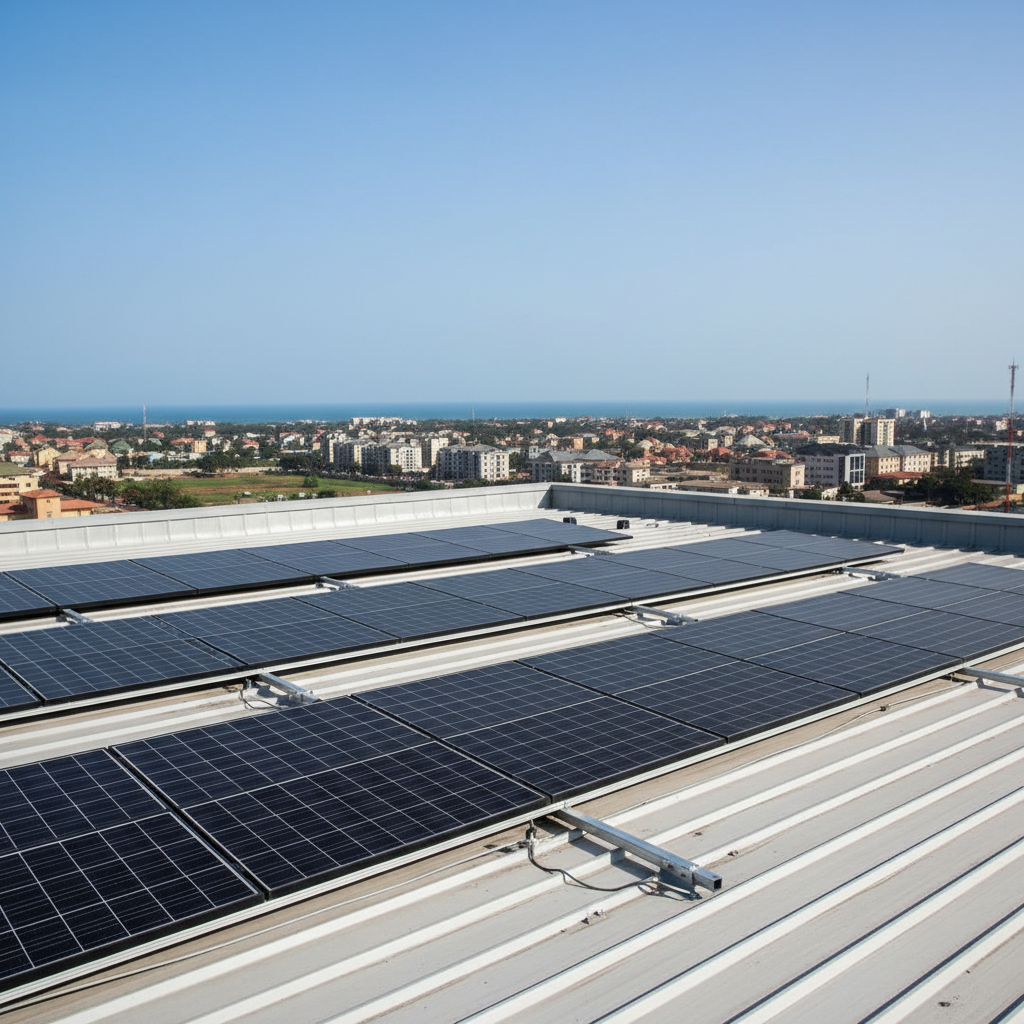
Why this question matters in Lekki right now
For small business owners in regions like Lekki, Victoria Island, and Ikoyi, the transition from grid dependency to energy sovereignty is no longer a luxury—it is a fiscal necessity. The recent upward adjustments in Multi-Year Tariff Order (MYTO) by the Nigerian Electricity Regulatory Commission (NERC) have moved many Lekki feeders into Band A, where commercial rates have historically spiked as high as 225 NGN per kWh. When combined with the erratic reliability of the Transmission Company of Nigeria (TCN) national grid, businesses face a dual threat: exorbitant bills and productivity-killing outages.
In Lekki, specifically, the coastal humidity and salt-mist environment pose unique challenges to power electronics and solar mounting structures. Choosing the best solar bundle for a small office requires more than just buying panels; it requires sourcing components that can withstand the corrosive Lagos air while managing the high ambient temperatures that affect inverter efficiency.
By the numbers: Nigeria's grid reliability remains a critical hurdle for SMEs, with the International Energy Agency (IEA) noting that nearly 40% of electricity generated is lost to technical and commercial inefficiencies before reaching the end-user. Source: IEA Africa Energy Outlook.
Selecting a bundle like our Silver Bundle ensures that a 5kVA system is optimized for these specific local stressors, providing a seamless transition between grid, battery, and solar power with zero downtime for servers and workstations.
Real-world load profile
Effective solar engineering begins with a meticulous load audit. We do not size systems based on the number of rooms, but on the cumulative Watt-hours (Wh) consumed during office hours (typically 8:00 AM to 6:00 PM). In a Lekki small office, the primary loads are the inverter air conditioner (AC), workstation PCs, high-definition monitors, and networking gear like Starlink or fiber routers.
Below is a typical load profile for a 5-8 person office using our estimator tool metrics:
| Appliance | Qty | Power (Watts) | Avg. Hours/Day | Total Wh/Day |
|---|---|---|---|---|
| Workstation Laptops (Type-C) | 8 | 65 | 9 | 4,680 |
| 1.5HP Inverter AC | 1 | 1,100 | 6 | 6,600 |
| LED Office Lighting | 10 | 12 | 10 | 1,200 |
| Starlink / Networking Gear | 1 | 75 | 10 | 750 |
| Fridge/Water Dispenser | 1 | 150 | 8 | 1,200 |
| CCTV & Security Monitor | 1 | 100 | 24 | 2,400 |
| TOTAL DAILY ENERGY | 16,830 Wh |
For an office consuming approximately 16.8 kWh per day, a 5kVA system with 10kWh to 15kWh of storage is the baseline requirement. This ensures that even during extended cloudy spells or the peak of the Harmattan season, the office remains operational without resorting to a diesel generator.
Inverter sizing math
The heart of your solar bundle is the inverter. When searching for the best solar bundle for a small office in Lekki, you must distinguish between Kilovolt-Amps (kVA) and Kilowatts (kW). Most entry-level inverters have a Power Factor (PF) of 0.8. Therefore, a 5kVA inverter actually supports a continuous output of 4kW (5,000 * 0.8).
In a commercial setting, inductive loads—specifically air conditioning compressors and refrigerator motors—require a "surge" current when starting. This is why we recommend Pure Sine Wave inverters with at least a 200% surge capacity for 5 seconds. Using the Maypatronic Shop high-frequency or low-frequency options, we ensure that the startup current for a 1.5HP AC (which can peak at 3,000W momentarily) does not trigger an overload shutdown.
Engineer's note — In Lekki’s Phase 1 or 2, we often see high neutral-to-earth voltage. We always install a dedicated earthing pit for our office solar bundles to protect sensitive PCB components in modern Inverter ACs. Without this, the 'floating neutral' common in Nigerian distribution networks will eventually fry your inverter's charging circuit. — Maypatronic Solar Engineering Team
LiFePO4 battery sizing math
Traditional lead-acid or gel batteries are increasingly obsolete for Lagos offices due to their short lifespan and sensitivity to heat. The standard for a modern business solution is Lithium Iron Phosphate (LiFePO4). These batteries offer a 10-year design life and allow for deep discharges that would destroy a Lead-Acid battery in months.
To calculate the usable energy of a battery bank, we use the formula: Usable kWh = Nominal Voltage × Amp-Hours × Depth of Discharge (DoD) × Efficiency Ratio
For a standard 10kWh LiFePO4 pack in our Silver Bundle:
- Total Capacity: 48V × 200Ah = 9,600 Wh (9.6 kWh)
- Usable Capacity (at 80% DoD): 9.6 kWh × 0.80 = 7.68 kWh
- Cycles: 4,000 to 6,000 cycles (approx. 10+ years of daily use)
Compared to 1,000 cycles for premium Gel batteries, the ROI on LiFePO4 is undeniable. Furthermore, Lithium batteries maintain a Round Trip Efficiency (RTE) of ~95%, meaning less energy is wasted as heat during the charge/discharge process—a vital factor in the high-temperature environment of an office server room in Lekki.
By the numbers: LiFePO4 batteries can operate efficiently at temperatures up to 45°C without significant degradation, whereas Lead-Acid battery life is halved for every 10°C rise above 25°C. Source: BloombergNEF and CATL Battery Datasheets.
Solar PV array sizing and roof footprint
Many Lekki office buildings have limited roof space due to water tanks, HVAC units, and architectural features. To optimize space, we use High-Efficiency Monocrystalline PERC or N-Type panels. In West Africa, according to NIMET data, we receive an average of 4.5 Peak Sun Hours (PSH) per day.
To recharge a 10kWh battery bank while simultaneously powering a 2kW daytime office load, the math is as follows:
- Direct Load Coverage: 2kW load during 5 peak hours = 10kWh
- Battery Recharge Requirement: 8kWh
- Total PV Harvest Needed: 18kWh / 4.5 PSH = 4.0kW of Solar PV panels.
This would require 8 units of 550W panels. Each 550W panel is approximately 2.2 square meters. Therefore, you need roughly 18-20 square meters of unshaded roof space. On Lekki rooftops, we take additional care to use aluminum or galvanized steel mounting rails to prevent rust from the high saline content in the air near the Atlantic.
Indicative cost breakdown in NGN
Cost is the primary driver for small office decisions. While prices fluctuate based on the exchange rate of the Naira, the following table provides a professional estimate for a premium 5kVA system with Lithium storage installed in Lekki.
| Component | Description | Qty | Unit Cost (NGN) | Subtotal (NGN) |
|---|---|---|---|---|
| 5kVA Pure Sine Inverter | Hybrid MPPT | 1 | 750,000 | 750,000 |
| 10kWh LiFePO4 Battery | 48V 200Ah Wall-Mount | 1 | 2,850,000 | 2,850,000 |
| 550W Mono Solar Panels | Tier 1 (JA/Longi) | 8 | 135,000 | 1,080,000 |
| Mounting Structures | Galvanized Steel Rail | 1 | 250,000 | 250,000 |
| Protection & Cabling | DC Breakers, AC Surge | 1 | 200,000 | 200,000 |
| Installation/Logistics | Pro Engineer Team | 1 | 350,000 | 350,000 |
| PROJECT TOTAL | 5,480,000 |
Note: Prices are estimates and subject to current market rates via our Shop.
ROI vs diesel generator
Operating a 15kVA or 20kVA diesel generator in Lekki for 8 hours a day has become financially unsustainable. With diesel prices often exceeding 1,200 NGN per liter, the operational expenditure (OPEX) of a generator outweighs the capital expenditure (CAPEX) of a solar system within two years.
Generator Monthly Cost Projection:
- Fuel Consumption: 2.5 liters/hour for 8 hours = 20 liters/day.
- Daily Cost: 20 L × 1,300 NGN = 26,000 NGN.
- Monthly Fuel (22 working days): 572,000 NGN.
- Maintenance (Oil/Filters): 50,000 NGN.
- Total Monthly OPEX: 622,000 NGN.
Solar Payback Period: Total System Cost (5,480,000 NGN) ÷ Monthly Savings (622,000 NGN) = 8.8 Months.
Even if the grid is available 50% of the time, the payback period remains under 18 months. Beyond the finances, the elimination of noise pollution and fumes enhances the professional environment of a Lekki office.
Engineer's note — Many clients try to cut costs by using auto-changeovers with their generators. For an office with servers, we recommend a global-state monitoring system like SolarAssistant. It allows the office manager to see energy levels on their phone, ensuring the AC is turned off if the battery SOC (State of Charge) drops below 30% on a rainy day. — Maypatronic Solar Engineering Team
Installation, warranty, and what Maypatronic includes
When you invest in a Silver Bundle or above, you aren't just buying hardware; you are buying engineering uptime. Our packages for Lekki offices include:
- Full Technical Site Survey: Every office has different shade dynamics. We use specialized tools to map sun paths and avoid shading from neighboring skyscrapers or telecommunication masts.
- Protection Suite: We don't just 'wire it up.' We install Type II Surge Protective Devices (SPD) on both the DC (solar) and AC (grid) sides. In Lagos, lightning and sudden EKEDC voltage spikes are common; our systems are built to isolate these faults.
- Tier-1 Warranties: We offer a 5-year warranty on Lithium batteries and a 25-year performance warranty on solar panels.
- After-Sales Support: Our knowledge base and local technical team provide rapid response times for any maintenance needs, such as panel cleaning to remove the salt and dust film common in Lekki.
For a customized quote tailored to your specific office needs, you can visit our contact page or use our automated estimator.
FAQ
Can I run a 2.0HP AC on a 5kVA solar system?
Yes, but with caveats. A modern inverter-type 2.0HP AC can typically be supported by a 5kVA system if it is the only primary heavy load. However, the startup surge and continuous draw (approx. 1,600W) will deplete a 5kWh battery rapidly. For offices with multiple ACs, we recommend upgrading to our Gold Bundle which features an 8kVA or 10kVA inverter to provide sufficient headroom for multiple compressors running simultaneously.
How does the Harmattan dust affect my solar yield in Lekki?
During the Harmattan season (December to February), fine dust particles settle on panels, which can reduce efficiency by up to 25%. Additionally, the hazy atmosphere reduces the intensity of the light reaching the cells. We recommend a monthly cleaning schedule during this period—using only deionized water and a soft squeegee—to maintain peak performance for your small office.
Do I still need to pay EKEDC if I have a solar bundle?
Most Lekki office installations are "Grid-Tied with Battery Backup" (Hybrid). This means you remain connected to the grid. The solar bundle acts as your primary source during the day, and the grid (or battery) takes over at night. This allows you to stay on a lower-cost tariff plan while significantly reducing your actual bill by 80-90% because you are only drawing from the grid when solar and battery are insufficient.
Is the salt air in Lekki a problem for the panels?
Yes, salt-mist corrosion is a real concern for coastal areas. At Maypatronic, we specify panels that have passed the IEC 61701 salt mist corrosion test. Furthermore, we use non-corrosive aluminum mounting systems instead of cheap mild steel, ensuring the structural integrity of your office installation for two decades or more.
Can I expand my 5kVA system later?
Our Silver Bundle is designed for modularity. You can add more batteries in parallel to increase your runtime at night, and provided your charge controller has the capacity, you can add more panels. If you anticipate significant growth—such as adding 10 more staff—we suggest starting with an 8kVA or 10kVA inverter to avoid the cost of replacing the heart of the system later.
What happens if it rains for three days straight?
In cases of prolonged cloud cover or heavy rain, your solar harvest will be minimal. The system will automatically switch to grid-charging (if the grid is present) to keep the batteries topped up. If there is neither sun nor grid, the system will manage the remaining battery life based on your programmed priority settings, ensuring essential services like routers and servers stay online the longest.
- Electrical servicesCertified installation & audits
- Scrap battery buy-backSame-day pickup + payment
- AI sizing estimatorkVA / kWh in 60 seconds
- Solar bundles5 pre-engineered tiers
- B2B solutionsCommercial & industrial
- Talk to an engineerFree consultation