Choosing the Best Solar Bundle for Filling Station in Ikeja
Discover how to eliminate diesel costs for your Ikeja filling station with our Gold solar bundle, engineered for 24/7 pump and lighting reliability.
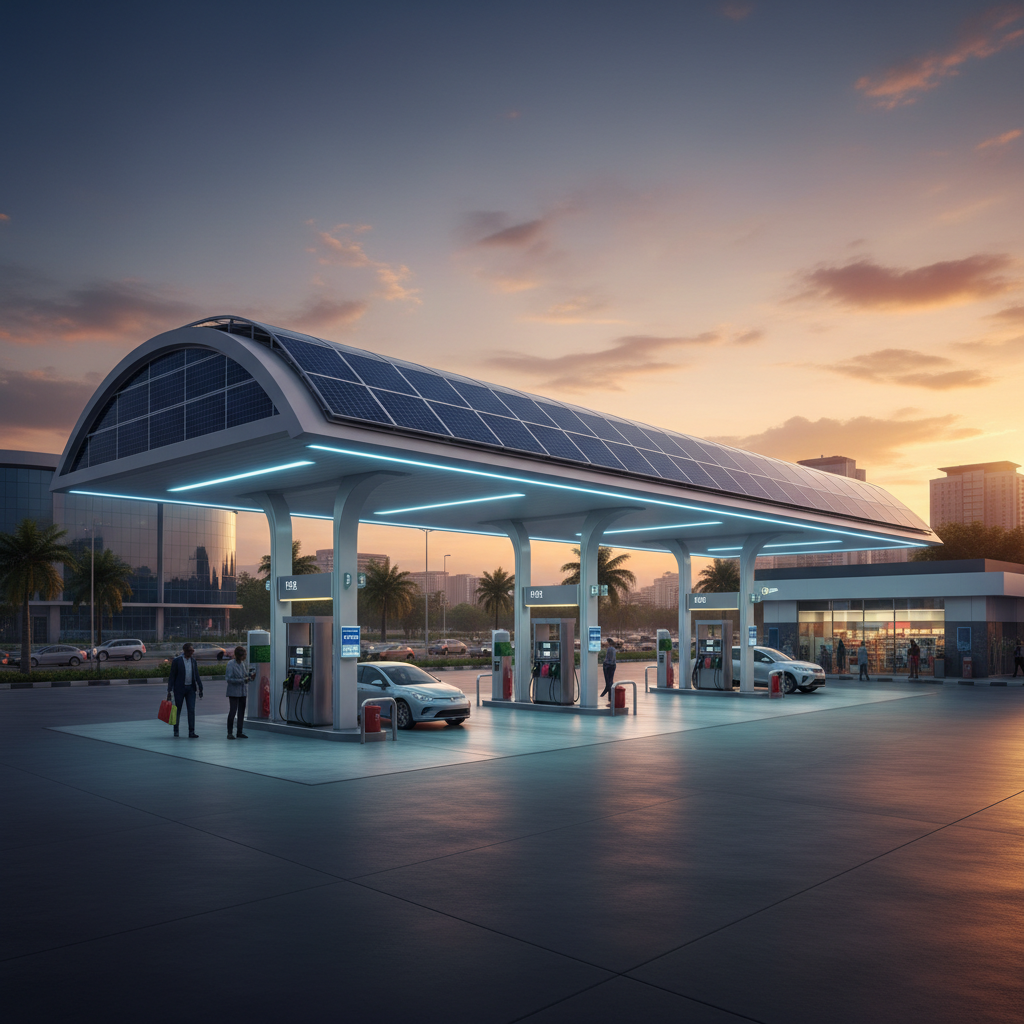
Why This Question Matters in Ikeja Now
For filling station owners in Ikeja, the economic landscape has shifted dramatically. With the removal of fuel subsidies and the floating of the Naira, the landed cost of PMS (Premium Motor Spirit) and AGO (Automotive Gas Oil) has skyrocketed, making the reliance on diesel generators to power fuel pumps a net-loss endeavor. In high-traffic zones like Allen Avenue, Obafemi Awolowo Way, and the Ikeja Industrial Estate, energy uptime is not just a convenience—it is a competitive necessity.
Recent data from the National Bureau of Statistics (NBS) indicates that the cost of AGO has increased by over 150% year-on-year, directly eroding the margins of petroleum marketers. In Ikeja, where grid supply from Ikeja Electric (EKEDP) is often subjected to load shedding or equipment failure due to aging infrastructure, the search for the best solar bundle for filling station in Ikeja is no longer a luxury for the eco-conscious; it is a survival strategy for the business-minded.
By the numbers: According to BloombergNEF, Nigeria has the highest density of backup generators globally, with SMEs spending up to 40% of their total operational costs on fuel and generator maintenance. For an Ikeja filling station, this figure can rise to 55% during peak periods.
Real-World Load Profile for an Ikeja Filling Station
Sizing a solar system for a gas station requires precision. Unlike a residential home, a filling station has high-torque inductive loads (pump motors) and continuous lighting requirements. A standard 6-pump station in Ikeja typically operates between 6:00 AM and 10:00 PM, with security lighting and CCTV running 24/7.
Below is a typical daily load profile analysis used by our engineering team to determine the appropriate system capacity.
| Appliance Type | Quantity | Rating (Watts) | Daily Usage (Hrs) | Total Wh/Day |
|---|---|---|---|---|
| Dispensing Pumps (Inductive) | 6 | 750 (1HP) | 10 | 45,000 |
| LED Canopy Lighting | 12 | 100 | 12 | 14,400 |
| Office AC (Inverter type) | 1 | 1,200 | 6 | 7,200 |
| CCTV & DVR System | 1 | 150 | 24 | 3,600 |
| Point of Sale (POS) & PC | 3 | 200 | 12 | 7,200 |
| Total Estimated Daily Consumption | 77,400 Wh (77.4 kWh) |
Selecting the Gold Solar Bundle provides the necessary headroom to handle these startup surges, particularly for the pump motors which can draw 3-5 times their running current upon ignition.
Inverter Sizing Math: kVA vs. kW and Power Factor
One of the most common mistakes in the Ikeja solar market is equating kVA with kW. For an industrial application like a filling station, we must account for the Power Factor (PF). Most modern solar inverters have a PF of 0.8 to 1.0.
If you have a 10kVA inverter with a 0.8 PF, your actual usable power is 8kW. If your filling station pumps are running simultaneously, a 10kVA system might struggle if not sized with high-surge capacity inverters.
Engineer's note — The Maypatronic Solar Engineering Team recommends transformer-based inverters or high-frequency inverters with at least a 300% surge rating for 10 seconds for Ikeja filling stations. This ensures that when three pumps start at the exact same second, the inverter doesn't enter 'overload' protection mode and shut down your entire forecourt.
When you use our /estimator, we calculate these inductive spikes to ensure your system never trips during peak hours.
LiFePO4 Battery Sizing Math for 24/7 Reliability
For a filling station, lead-acid or tubular batteries are no longer viable. The high heat in Ikeja and the frequent deep discharge cycles will kill a lead-acid battery in less than 24 months. We exclusively utilize Lithium Iron Phosphate (LiFePO4) for our Gold bundles.
To calculate the required battery bank for a station consuming 77kWh daily, assuming 60% of that occurs during daylight hours (solar direct) and 40% (approx 30kWh) at night:
- Required Night Capacity: 30kWh.
- Depth of Discharge (DoD): We target 80% to maximize lifespan.
- Calculation: 30kWh / 0.8 = 37.5kWh usable storage.
- Round up: For redundancy, a 40kWh to 50kWh battery bank is recommended.
By the numbers: According to the International Renewable Energy Agency (IRENA), the Round Trip Efficiency (RTE) of LiFePO4 batteries is approximately 95-98%, compared to just 70-80% for lead-acid. This means you lose less energy just by moving it in and out of the battery.
Solar PV Array Sizing and Roof Footprint
Ikeja, Lagos, receives an average of 4.5 Peak Sun Hours (PSH) annually, according to NIMET data. During the Harmattan season, dust accumulation can reduce efficiency by 15-20%, a factor we must build into our math.
To generate 80kWh a day in Ikeja:
- 80kWh / 4.5 PSH = 17.7 kWp of solar panels.
- Accounting for 20% system losses (soiling, cabling, heat): 17.7 / 0.8 = 22.2 kWp.
Using high-efficiency 550W N-Type Bifacial panels, you would need approximately 40 panels.
- Footprint: Each panel is roughly 2.2 square meters.
- Total Space: 40 x 2.2 = 88 square meters of roof space.
Most filling station canopies in Ikeja are perfectly suited for this, providing an unobstructed, elevated surface that minimizes shading from nearby buildings in the CBD.
Indicative Cost Breakdown in NGN
While prices fluctuate based on the exchange rate, the following table provides a comparative overview of why the Gold bundle is the best solar bundle for filling station in Ikeja compared to lower-tier options.
| Component | Bronze Bundle (Basic) | Gold Bundle (Station Grade) |
|---|---|---|
| Inverter Capacity | 5kVA | 15kVA (Parallel/Three-Phase) |
| Battery Chemistry | Lead-Acid/Tubular | LiFePO4 (High-C Rating) |
| Solar Capacity | 3kWp | 15kWp - 25kWp |
| Pump Support | 1 Pump (Limited) | All Pumps + AC + Lighting |
| Lifespan Expectancy | 2-3 Years | 10-15 Years |
| Monitoring | Local LCD | Remote Cloud Monitoring |
For a detailed quote tailored to your specific station coordinates, visit our /contact page.
ROI vs. Diesel Generator: The Engineering Verdict
A standard 20kVA diesel generator at an Ikeja station consumes roughly 3.5 liters per hour under 70% load. At NGN 1,300 per liter, running the generator for 12 hours a day costs NGN 54,600 daily, or over NGN 1.6 Million monthly in fuel alone, excluding servicing and filters.
Engineer's note — The payback period (ROI) for a Gold-tier solar installation at a Lagos filling station currently sits at 18 to 24 months. Considering the hardware is warranted for 5 years and designed to last 15+, the station essentially enjoys "free" energy for over a decade after the breakeven point. This is the single most effective way to protect your business from future NERC tariff hikes.
Installation, Warranty, and the Maypatronic Advantage
Deploying solar in a volatile environment like a filling station requires specialized safety protocols. At Maypatronic, our installations follow strict ESMAP guidelines for hazardous locations, ensuring all cabling is armored and PV combiners are placed away from vapor vents.
Our bundles include:
- Tier 1 Solar Panels: With 25-year linear power warranties.
- LiFePO4 Storage: With advanced Battery Management Systems (BMS).
- Remote Monitoring: So you can track energy production from your smartphone anywhere in the world.
- Professional Earthing: Crucial for Ikeja’s thunderstorm frequency during the rainy season.
If you are unsure which scale fits your station, explore our /business solutions or use the /estimator to get a baseline calculation.
FAQ: Solar for Ikeja Filling Stations
Can solar power my underground pump motors?
Yes. However, because pump motors are inductive loads, we size the inverter to handle the initial "in-rush" current. Our Gold bundle is specifically designed with high-surge capacity inverters to ensure pumps start smoothly without tripping the system.
How do I handle Harmattan dust in Ikeja?
Ikeja experiences significant dust during the Harmattan months. We recommend a monthly cleaning schedule for your panels. Our installation packages can include an optional automated sprinkler system or a maintenance contract to keep your PV array performing at IEA standard efficiency levels.
Is it possible to go 100% off-grid?
While possible, we often recommend a "Grid-Tie with Battery Backup" hybrid approach. This allows you to use EKEDP power when available (at a lower cost than diesel), solar during the day, and batteries for the night, with the generator only as a third-tier emergency backup.
How long does the installation take?
For a standard filling station in Ikeja, the physical installation takes 5 to 7 business days. This includes mounting the structures, wiring the pumps to the new solar distribution board, and commissioning the battery bank.
What happens if a panel breaks?
Our panels are made of tempered glass designed to withstand heavy hail and minor impacts. However, if a panel is damaged, our Gold and Platinum bundles come with a replacement guarantee. We stock all components locally in our Lagos warehouse for rapid response.
Can I monitor my station's power usage remotely?
Absolutely. All Maypatronic commercial installations include a WiFi/GPRS datalogger. You can see real-time data on how much solar is being generated, how much fuel cost you are saving, and the state of your batteries via a mobile app. Check our /blog for tutorials on using our monitoring software.
- Electrical servicesCertified installation & audits
- Scrap battery buy-backSame-day pickup + payment
- AI sizing estimatorkVA / kWh in 60 seconds
- Solar bundles5 pre-engineered tiers
- B2B solutionsCommercial & industrial
- Talk to an engineerFree consultation