Cost of 10kVA Solar System with Lithium Battery in Lagos (2026 Pricing & ROI)
Real 2026 Lagos pricing for a turnkey 10kVA hybrid + 15kWh LiFePO4 system: load math, payback against diesel, and what Maypatronic includes. Get a quote on WhatsApp.
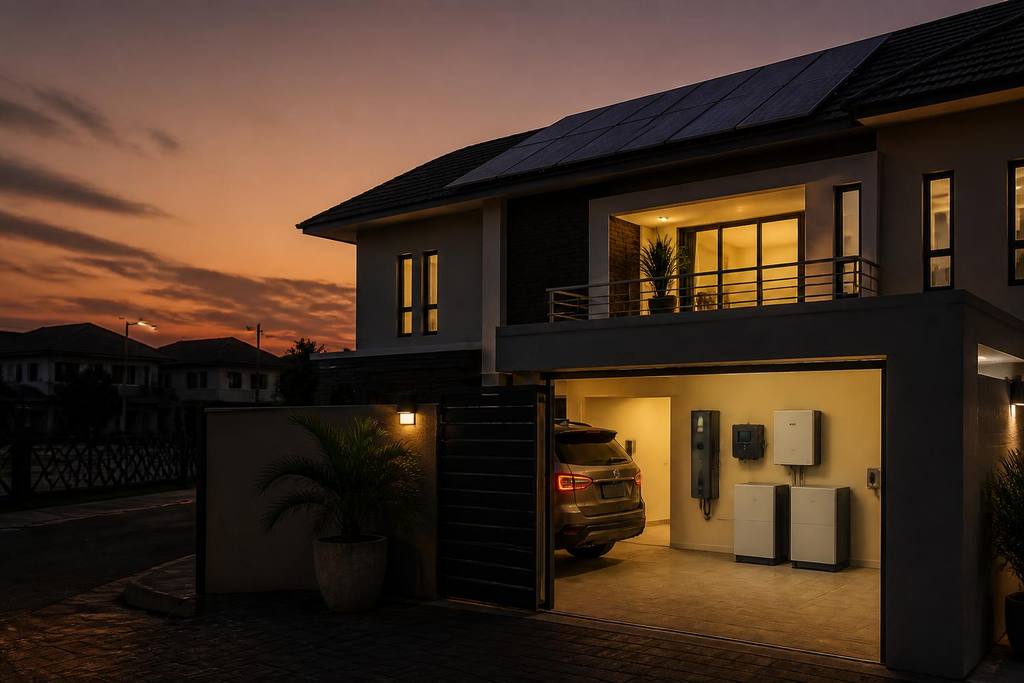
Why this question matters in Lagos right now
Lagos State runs on a brittle grid. Most estates on the Ikoyi, Lekki, Surulere and Magodo bands now log between 8 and 14 hours of outages every single day, with the worst stretches arriving during the dry-season peak load (March, April, October). The default reflex — a 7.5kVA petrol or 10kVA diesel generator — has quietly become one of the most expensive line items in the average Lagos household budget, easily clearing ₦180,000 to ₦320,000 a month in fuel, oil and servicing for a family of five running ACs and a freezer.
Against that backdrop, the "10kVA solar system with lithium battery" has become the single most-searched residential energy package in Lagos. Ten kVA is the sweet spot: enough headroom to run two inverter ACs, a borehole pump, a deep freezer, a smart TV setup, laptops and lighting concurrently — without the wasteful idling of a generator twice that size.
This guide breaks down what a properly engineered 10kVA hybrid solar + LiFePO4 installation costs in Lagos in 2026, exactly how the kit is sized, and how quickly it pays itself back against your current diesel bill.
Bottom line: a turnkey 10kVA hybrid + 15kWh LiFePO4 + 6kWp PV system in Lagos lands between ₦4.95M and ₦6.2M all-in, and displaces around 180-260 litres of diesel per month at current Lagos pump prices.
Real-world load profile
Before we touch any prices, the system has to be sized from the actual load — not from generator nameplate ratings. A typical 4-bedroom Lekki / Magodo / Ajah household profile looks like this:
| Load | Rated W | Qty | Runtime / day | Daily Wh |
|---|---|---|---|---|
| Inverter AC (1.5HP) | 900 | 2 | 8 h | 14,400 |
| Deep freezer | 250 | 1 | 24 h (35% duty) | 2,100 |
| Refrigerator | 180 | 1 | 24 h (30% duty) | 1,296 |
| Borehole pump (1HP) | 750 | 1 | 1 h | 750 |
| LED lighting | 12 | 18 | 6 h | 1,296 |
| Smart TV + decoder | 180 | 1 | 6 h | 1,080 |
| Laptops + Wi-Fi + phones | 200 | 1 | 10 h | 2,000 |
| Iron / kettle (short burst) | 1,500 | 1 | 0.5 h | 750 |
| Total daily energy | ≈ 23.7 kWh | |||
| Peak simultaneous draw | ≈ 5.4 kW |
Two numbers matter here: peak simultaneous draw (~5.4 kW) drives the inverter sizing, and daily energy (~23.7 kWh) drives both the battery and the PV array sizing.
Inverter sizing math
Hybrid inverters are rated in kVA, but loads draw kW. The relationship is:
kW = kVA × power factor
For typical residential loads, the power factor sits at 0.8. So a 10kVA inverter delivers a continuous 8 kW of real power, with short surge tolerance of about 20 kW (2× rated) for motor start-up — exactly what a 1HP borehole pump and inverter AC compressors need on cold start.
- Peak measured load: 5.4 kW
- Inverter continuous rating: 8 kW
- Surge headroom: 14.6 kW
- Verdict: 10kVA is correctly sized with ~32% headroom for future loads (a third AC, a small workshop).
A 7.5kVA inverter (6 kW continuous) would technically run the load on paper, but you would lose the ability to start the borehole pump while both ACs are running — the classic Lagos complaint.
LiFePO4 battery sizing math
Lithium iron phosphate (LiFePO4) is now the only sensible chemistry for Nigerian residential storage. The math:
Usable kWh = Nominal kWh × Depth of Discharge × Round-trip efficiency
For premium LiFePO4 cells:
- Depth of Discharge (DoD): 80% (safe daily cycling)
- Round-trip efficiency: 95%
- Cycle life at 80% DoD: 6,000+ cycles (~16 years of daily cycling)
The household needs roughly 15 kWh of backup energy to cover the worst-case scenario: a full evening + overnight outage with the next day's solar yield delayed by harmattan haze.
Required nominal = 15 / (0.80 × 0.95) = 19.7 kWh
In practice, two 10kWh wall-mounted LiFePO4 cabinets in parallel (20 kWh nominal, 16 kWh usable) is the standard Maypatronic spec for this tier — and it leaves room for an EV trickle-charger downstream.
Why not lead-acid? A 20 kWh useful lead-acid bank would need ~40 kWh of nominal capacity (50% DoD ceiling), weigh over 1.2 tonnes, and need full replacement every 18-24 months. The 5-year total cost of ownership is roughly 2.4× a LiFePO4 bank.
Solar PV array sizing and roof footprint
West African peak sun hours (PSH) average about 4.5 h/day in Lagos, derated for tropical haze and panel temperature losses.
Array kWp = Daily energy / (PSH × system losses)
Array kWp = 23.7 / (4.5 × 0.85) ≈ 6.2 kWp
That works out to:
- 14 × 450W bifacial panels, or
- 10 × 620W high-efficiency mono panels (the modern Maypatronic preference — fewer roof penetrations, faster install)
A 10-panel 620W array occupies roughly 22 m² — comfortably fits a typical 4-bedroom Lekki roof on the longest south-facing pitch, with a tilt angle of 7-10° (close to Lagos latitude).
Indicative cost breakdown in NGN
These are 2026 Lagos street prices for genuine-warranty equipment, not the grey-market clones from Alaba. Maypatronic Gold Bundle equivalent:
| Line item | Qty | Unit (₦) | Subtotal (₦) |
|---|---|---|---|
| 10kVA hybrid pure sine inverter (split-phase, MPPT inside) | 1 | 1,150,000 | 1,150,000 |
| 10kWh wall-mount LiFePO4 with BMS | 2 | 1,400,000 | 2,800,000 |
| 620W mono PV panels (Tier-1) | 10 | 95,000 | 950,000 |
| Aluminium roof mounting + clamps | 1 set | 280,000 | 280,000 |
| DC + AC cabling, breakers, SPDs, combiner box | 1 set | 220,000 | 220,000 |
| Earthing kit + lightning arrestor | 1 set | 95,000 | 95,000 |
| Installation, commissioning, monitoring setup | 1 | 350,000 | 350,000 |
| Logistics (Lagos mainland / island delivery) | 1 | 105,000 | 105,000 |
| Turnkey total | ₦5,950,000 |
Sub-tiers exist: a leaner 6kWh/4kWp build for a 2-bedroom flat lands around ₦3.9M (Silver bundle), and a 30kWh/10kWp three-phase commercial build clears ₦11.5M (Platinum).
ROI vs diesel generator
The decisive number. Compare the new system against the user's current 7.5kVA generator running 9 h/day:
- Diesel consumption at 75% load: 2.2 litres/hour
- Daily: 2.2 × 9 = 19.8 L
- Monthly: 19.8 × 30 = 594 L
- Lagos AGO pump (June 2026): ₦1,420 / L
- Monthly diesel cost: ₦843,480
- Plus oil + filters + servicing: + ₦35,000/month
- Effective monthly generator OPEX: ≈ ₦878,000
After the solar system is commissioned, generator runtime drops to standby duty (roughly 2 days/month during overcast spells):
- Residual diesel: ~40 L/month = ₦56,800
- Net monthly saving: ₦821,000
Payback on the ₦5,950,000 capex:
Payback = 5,950,000 / 821,000 ≈ 7.2 months
Even with conservative assumptions (60% generator displacement, fuel at ₦1,200/L), payback stays under 14 months. After that, every saved litre is pure margin for the next 15+ years of cell life.
Installation, warranty, and what Maypatronic includes
Every Maypatronic Gold installation in Lagos ships with:
- Site survey (rooftop pitch, shading, switchboard audit) before quoting
- Two-day install crew of certified electricians + a structural lead for roof mounting
- 5-year inverter warranty (manufacturer-backed locally)
- 10-year LiFePO4 cell warranty (≥80% capacity retention)
- 25-year linear PV output warranty
- Remote monitoring app (live PV yield, battery SOC, AC/DC alarms)
- 24-month free service visits and post-sale support on WhatsApp
- Compliance documentation for LASEPA and the local DisCo
Typical project timeline from deposit to commissioning: 7-14 days depending on roof complexity and panel logistics.
FAQ
Will it run two inverter ACs through the night?
Yes. The 16 kWh usable LiFePO4 bank carries two 1.5HP inverter ACs (cycling at ~60% duty) plus the fridge/freezer pair for a full 10-12 hour overnight window without any solar input.
What happens during a 3-day harmattan haze?
PV yield drops to roughly 55% on heavy harmattan days. The hybrid inverter automatically tops up the battery from the grid (when available) or from a small standby generator — you set the priority in the app. Most Lagos clients keep their old generator as a backup-to-the-backup.
Can the system be expanded later for an EV charger?
Yes. The 10kVA inverter has spare AC capacity for a 3.3 kW Type-2 home charger. The Maypatronic Platinum bundle adds a dedicated wall-box and bumps the battery to 30 kWh for overnight EV charging on solar.
Is the price negotiable for cash payment?
We offer a 3% discount on full upfront payment and a structured 50/30/20 milestone plan for installments. Corporate clients on B2B terms can request a quarterly invoice cycle.
What roof types do you install on?
Long-span aluminium, stone-coated steel, and concrete decks are standard. Asbestos and clay-tile roofs require a separate ballasted mount and a slightly higher install cost (~₦80,000 extra).
Do you install outside Lagos?
Yes — Abuja, Port Harcourt, Ibadan, Benin, Enugu and Accra are all on our standard deployment map. Delivery and crew logistics are quoted on a per-project basis.
- Electrical servicesCertified installation & audits
- Scrap battery buy-backSame-day pickup + payment
- AI sizing estimatorkVA / kWh in 60 seconds
- Solar bundles5 pre-engineered tiers
- B2B solutionsCommercial & industrial
- Talk to an engineerFree consultation