Cost of 5kVA Solar System with Lithium Battery in Lagos and Accra
Discover the real-world costs and engineering requirements for a 5kVA solar system with lithium storage. Learn how to transition from grid instability to energy independence.
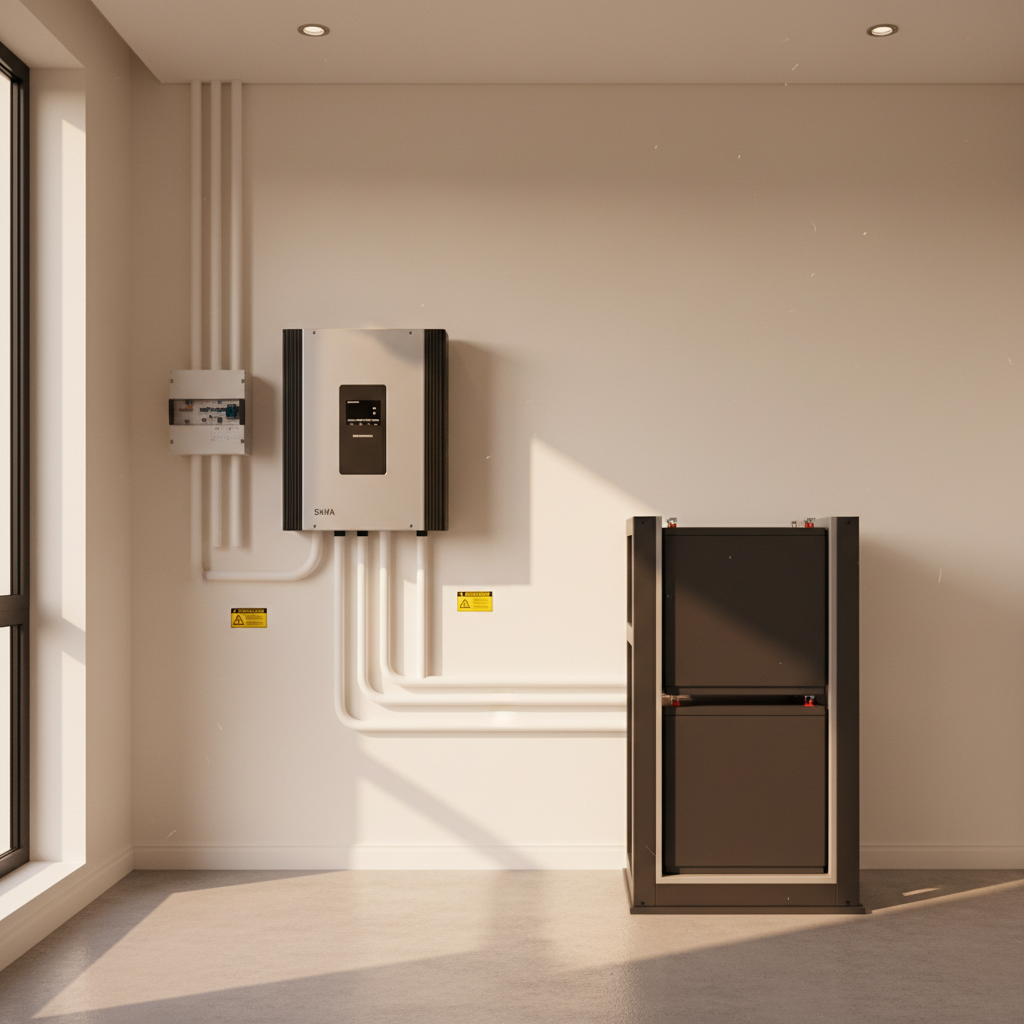
Why This Question Matters in West Africa Now
For residents and business owners in Lagos, Port Harcourt, or Accra, the energy landscape has reached a critical inflection point. The recent removal of fuel subsidies in Nigeria and the subsequent hike in PMS and diesel prices have made traditional generator sets nearly untenable for daily prime power. Simultaneously, the Nigerian Electricity Regulatory Commission (NERC) has overseen significant tariff reclassifications (Band A), where consumers now face prices exceeding ₦200/kWh for grid supply that remains intermittent at best.
In Ghana, the Electricity Company of Ghana (ECG) continues to battle infrastructure constraints leading to 'dumsor' cycles, forcing businesses to seek reliable alternatives. The cost of a 5kVA solar system with a lithium battery is no longer just a luxury purchase; it is a calculated capital investment to hedge against inflationary energy costs and grid collapse. According to the International Renewable Energy Agency (IRENA), the levelized cost of electricity (LCOE) for residential solar in Africa has dropped significantly, making it more competitive than diesel generation by a factor of three over a 10-year horizon.
By the numbers: According to BloombergNEF, the price of Lithium Iron Phosphate (LiFePO4) battery packs has fallen by over 80% since 2013, yet in West Africa, logistics and import duties keep the landed cost of a high-quality 5kVA/5kWh system between ₦4,500,000 and ₦7,500,000 depending on component grade. Source: Maypatronic Market Analysis 2024.
Real-World Load Profile for a 5kVA System
A 5kVA system is the 'sweet spot' for a standard three-bedroom apartment or a medium-sized office. However, many users confuse kVA (apparent power) with kW (real power). In solar engineering, we apply a power factor (PF)—usually 0.8 or 1.0 depending on the inverter topology—to determine exactly how many appliances can run simultaneously.
To ensure your /bundles#gold system performs optimally, you must audit your peak concurrent load. Overloading a 5kVA inverter leads to thermal stress and shortened component lifespan.
| Appliance Type | Quantity | Estimated Wattage | Total Watts |
|---|---|---|---|
| LED Lighting | 15 | 10W | 150W |
| Standing Fans | 4 | 60W | 240W |
| Smart TV (55") | 2 | 150W | 300W |
| Fridge/Freezer (Inverter Type) | 1 | 200W | 200W |
| Laptop Chargers | 3 | 65W | 195W |
| Microwave (Intermittent) | 1 | 1200W | 1200W |
| Total Continuous Load | 2,285W |
This profile leaves approximately 1.7kW of headroom for surge currents from compressor motors (pumps/ACs). If you plan to run a 1.5HP Air Conditioner, it must be an inverter model to avoid the 3x-5x startup surge that could trip a 5kVA unit.
Inverter Sizing Math: kVA vs. kW
When calculating the cost of a 5kVA solar system, the heart of the expenditure is the inverter. At Maypatronic, we utilize high-frequency and low-frequency pure sine wave inverters. A common mistake in the Lagos market is assuming a 5kVA inverter can handle 5,000 watts of continuous load.
Mathematically, Real Power (W) = Apparent Power (VA) x Power Factor. For a standard 5kVA transformer-based inverter with a 0.8 PF, your actual limit is 4,000W. If you exceed this, the inverter enters protection mode. Furthermore, efficiency losses (usually 10-15%) mean you should never design a system to run at 100% capacity for extended periods.
Engineer's note — The Maypatronic Solar Engineering Team recommends sizing your continuous load at no more than 60% of the inverter's rated capacity. This allows the cooling fans to operate at lower RPMs, reducing noise and preventing the drying out of electrolytic capacitors, which is the leading cause of inverter failure in the harsh, humid climate of West Africa.
For more precise calculations, we recommend using our solar load estimator to see if a 5kVA system fits your specific building profile.
LiFePO4 Battery Sizing and Depth of Discharge (DoD)
The shift from Lead-Acid (AGM/Gel) to Lithium Iron Phosphate (LiFePO4) has revolutionized solar ROI in Nigeria. While the upfront cost of a lithium battery is higher, the cost-per-cycle is significantly lower. A standard 5kVA system typically pairs with a 48V 100Ah (4.8kWh) or 48V 200Ah (9.6kWh) lithium bank.
Unlike Lead-Acid batteries, which should not be discharged below 50% to avoid plate sulfation, LiFePO4 batteries allow for an 80% to 95% Depth of Discharge (DoD). This means a 5kWh lithium battery provides more usable energy than a 10kWh lead-acid bank.
Battery Math:
- Total Capacity: 48V x 200Ah = 9,600Wh (9.6kWh)
- Usable Capacity (80% DoD): 9,600Wh x 0.8 = 7,680Wh
- Runtime at 1kW constant load: 7.68 hours
- Round Trip Efficiency (RTE): ~95%
By the numbers: According to the World Bank ESMAP, lithium-ion battery costs for stationary storage in emerging markets are projected to decline by another 30% by 2030, but current supply chain constraints in the Gulf of Guinea keep local prices pegged to USD fluctuations. Source: ESMAP Battery Storage Reports.
Solar PV Array Sizing and Roof Footprint
In Accra and Lagos, we average approximately 4.5 Peak Sun Hours (PSH) per day. This figure accounts for the heavy cloud cover during the rainy season and the Harmattan dust haze that reduces irradiance in December and January. To fully charge a 10kWh lithium battery while powering a daytime load of 1kW, you need an appropriately scaled PV array.
For a 5kVA system, we typically recommend between 3kWp and 4.5kWp of solar panels. Using 550W Tier-1 Monocrystalline PERC modules:
- 8 Panels x 550W = 4,400W (4.4kWp)
- Daily Generation = 4.4kWp x 4.5 PSH x 0.8 (system losses) = 15.84kWh per day.
This generation is sufficient to cover daytime needs and fully replenish the lithium storage for night use. In terms of roof footprint, 8 panels (each approx 2.2m x 1.1m) require roughly 20 square meters of unshaded space. We strongly advise using aluminum mounting rails to prevent the rust issues common in coastal cities like Lagos and Accra.
Indicative Cost Breakdown in NGN
Note: Prices are subject to change based on exchange rate volatility and Transmission Company of Nigeria (TCN) grid policy shifts.
| Component | Specification | Estimated Cost (Low End) | Estimated Cost (Premium) |
|---|---|---|---|
| Inverter | 5kVA Hybrid Pure Sine | ₦850,000 | ₦1,400,000 |
| Battery | 10kWh LiFePO4 (48V) | ₦2,800,000 | ₦3,900,000 |
| Solar Panels | 4.4kWp Mono PERC | ₦1,200,000 | ₦1,600,000 |
| MPPT Controller | Integrated or External | Included | ₦250,000 |
| Protection Gear | DC/AC Breakers, SPD | ₦150,000 | ₦300,000 |
| Installation/Logistics | Cables, Racking, Labor | ₦300,000 | ₦500,000 |
| Total | ₦5,300,000 | ₦7,950,000 |
For a detailed quote tailored to your location, visit our /contact page to speak with a field engineer.
ROI vs. Diesel Generator
Many Nigerians compare the cost of a 5kVA solar system to the purchase price of a 5kVA-10kVA diesel generator (approx. ₦1.5m to ₦2.5m). This is a false equivalence. The true comparison is the Total Cost of Ownership (TCO).
A 10kVA diesel generator consumes roughly 2.5 liters of fuel per hour at 50% load. At ₦1,200 per liter, running the generator for 10 hours daily costs ₦30,000 in fuel alone, totaling ₦900,000 per month. This excludes oil changes, filters, and mechanical repairs.
Engineer's note — When you invest in a Maypatronic /bundles#gold lithium system, the payback period (ROI) against a diesel generator is currently 14 to 18 months. After this period, your electricity is essentially free for the remaining 10-15 years of the lithium battery's life, whereas the generator remains a permanent liability.
Installation, Warranty, and What Maypatronic Includes
Professional installation is non-negotiable in the West African climate. High humidity leads to terminal corrosion, and poor earthing leads to lightning damage during the Atlantic storm season. Every 5kVA system we deploy includes:
- Remote Monitoring: View your system performance via a mobile app.
- Lightning Protection: Type 2 Surge Protective Devices (SPD) on both AC and DC sides.
- Professional Earthing: Ensuring a low-impedance path to ground (less than 2 Ohms).
- Warranty: A minimum 5-year warranty on lithium batteries and 12-month workmanship guarantee.
If you are a business owner looking to stabilize your operations, check our /business solutions for tax-deductible renewable energy investments. For individual components like panels or charge controllers, you can browse our /shop.
FAQ
Can a 5kVA solar system run an Air Conditioner?
Yes, it can run one 1HP or 1.5HP inverter-type air conditioner comfortably during the day when the sun is bright. However, running an AC at night requires significantly larger lithium storage (at least 15kWh-20kWh) to avoid depleting the batteries before dawn.
How long does a lithium battery last in Nigeria?
High-quality LiFePO4 batteries are rated for 4,000 to 6,000 cycles. If cycled once daily, the battery can last between 10 and 15 years, far outperforming the 2-year lifespan typical of lead-acid batteries in our hot climate.
Does Harmattan affect solar production?
Yes. Harmattan dust can reduce solar output by 20% to 50% due to 'soiling' and atmospheric haze. During these months, we recommend cleaning your panels with water and a soft squeegee every two weeks to maintain efficiency.
What is the difference between the Silver and Gold bundles?
Our Silver bundles often use smaller battery capacities or slightly lower-wattage panels. The Gold bundle is our flagship 5kVA solution, optimized for maximum autonomy and high-performance lithium cells. You can compare them at /bundles.
Is it cheaper to buy solar in Accra or Lagos?
Prices are generally similar due to ECOWAS trade agreements, but Nigeria’s larger market volume sometimes results in slightly lower component prices. However, Ghana's stable currency (Cedi) relative to the Naira can make long-term planning easier for Ghanaian customers.
Can I start with just batteries and no panels?
Yes, this is called an 'Inverter Backup System.' You charge the lithium battery from the ECG or EKEDP grid when power is available and use it during outages. You can add solar panels later as your budget allows.
- Electrical servicesCertified installation & audits
- Scrap battery buy-backSame-day pickup + payment
- AI sizing estimatorkVA / kWh in 60 seconds
- Solar bundles5 pre-engineered tiers
- B2B solutionsCommercial & industrial
- Talk to an engineerFree consultation