How to size a LiFePO4 battery storage for borehole pump
Learn the engineering math to size LiFePO4 storage for your borehole pump, reducing reliance on expensive diesel and erratic grid supply.
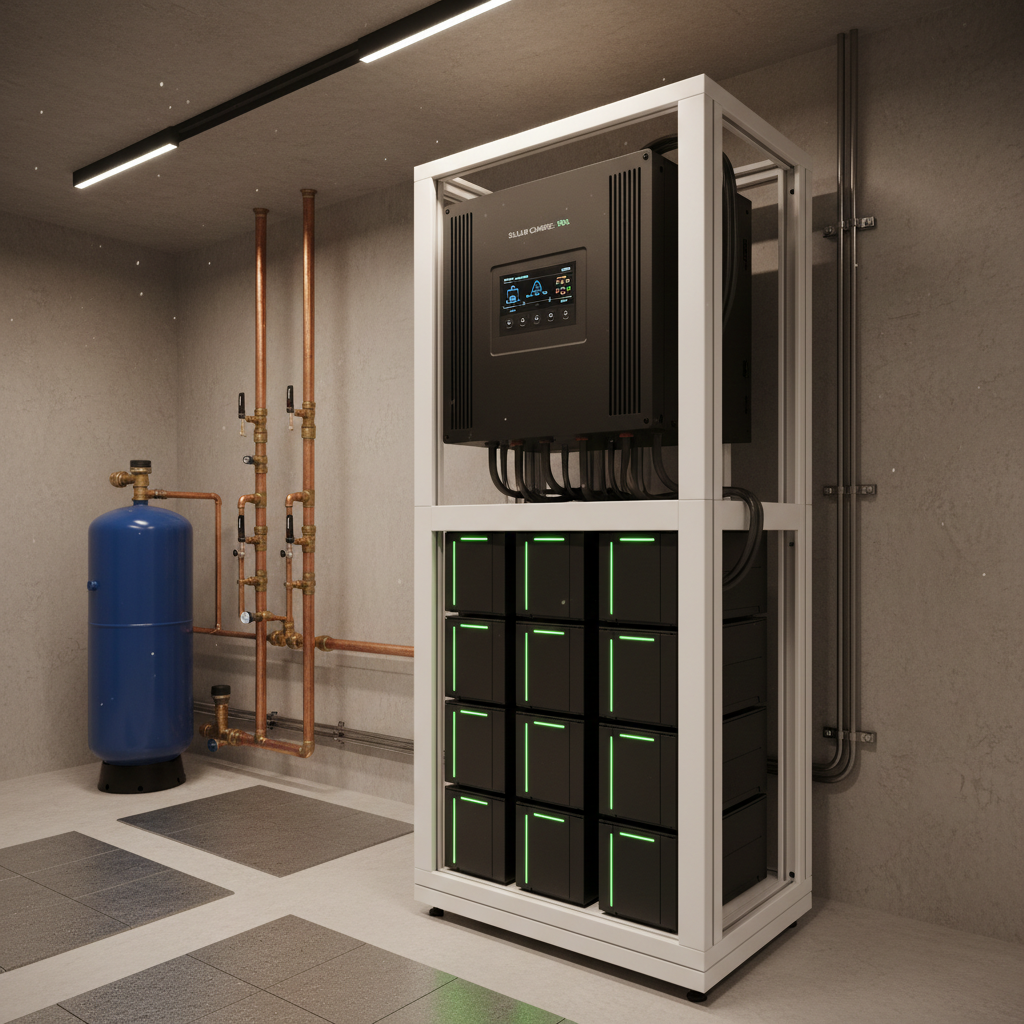
Why Sizing LiFePO4 Storage for Boreholes Matters in Nigeria
For the average Nigerian homeowner or facility manager, the borehole pump is arguably the most critical load after refrigeration. With the recent removal of fuel subsidies and the upward trajectory of electricity tariffs under the Service-Based Tariff (SBT) framework by the Nigerian Electricity Regulatory Commission (NERC), relying on petrol or diesel generators to pump water has become financially unsustainable.
Furthermore, the national grid instability, frequently reported by the Transmission Company of Nigeria (TCN), means that water availability is often tied to the whims of the grid. Transitioning to Lithium Iron Phosphate (LiFePO4) storage is not just an environmental choice; it is a strategic economic move to ensure water security. Unlike traditional Lead-Acid or Gel batteries, LiFePO4 offers the high discharge rates necessary to handle the inductive surge of pump motors without damaging the internal chemistry.
By the numbers: According to BloombergNEF, the price of Lithium-ion battery packs has dropped by over 80% in the last decade, yet in the Nigerian market, the total cost of ownership is now 40% lower than diesel generation over a 5-year period due to soaring PMS and AGO prices.
Real-World Load Profile and Surge Requirements
Sizing storage for a borehole pump is significantly more complex than sizing for lights or TVs. A pump is an inductive load, meaning it requires a massive "inrush current" to start the motor. A standard 1HP (0.75kW) submersible pump might pull only 4-5 Amps while running, but it can demand up to 15-25 Amps for a few milliseconds during startup.
To accurately determine how to size a LiFePO4 battery storage for borehole pump, we must first categorize the typical pumps found in Nigerian households (Lagos, Abuja, Port Harcourt).
| Pump Type | Nominal Power (Watts) | Start-up Surge (Watts) | Recommended Inverter Size |
|---|---|---|---|
| 0.5 HP | 375W | 1,125W - 1,875W | 1.5kVA - 2kVA |
| 1.0 HP | 750W | 2,250W - 3,750W | 3kVA - 3.5kVA |
| 1.5 HP | 1,125W | 3,375W - 5,625W | 5kVA |
| 2.0 HP | 1,500W | 4,500W - 7,500W | 5kVA - 7.5kVA |
Using our load estimator can help you determine if your current inverter can handle these spikes. If you are starting from scratch, our /bundles#silver package is specifically engineered to handle 1HP pump loads alongside basic lighting and electronics.
Inverter Sizing Math: The Power Factor and Surge Factor
When sizing an inverter for a LiFePO4 system, you must distinguish between kVA (Apparent Power) and kW (Real Power). Most inverters in the Nigerian market have a Power Factor (PF) of 0.8 or 1.0. For an inductive load like a borehole pump, we always apply a safety multiplier of 3x to 5x for the surge.
Calculation Example: For a 1HP pump (750W):
- Running Load: 750W.
- Surge Requirement: 750W x 3 = 2,250W.
- Minimum Inverter Size: A 3kVA inverter (at 0.8 PF) provides 2,400W of continuous power. This is the baseline for safety.
Engineer's note — Maypatronic Solar Engineering Team: "We frequently see 'dead' LiFePO4 BMS (Battery Management Systems) because users try to run 1.5HP pumps on 2.4kW inverters. Even if the inverter survives, the BMS on the lithium battery may trigger an Over-Current Protection (OCP) shutoff if the discharge rate exceeds the battery's 'C-Rating'. Always ensure your LiFePO4 bank can handle the peak discharge current."
LiFePO4 Battery Sizing Math: Capacity and Depth of Discharge
Unlike Lead-Acid batteries that shouldn't be discharged past 50%, LiFePO4 batteries can safely handle an 80% to 90% Depth of Discharge (DoD). This makes them ideal for the high-intensity, short-duration task of pumping water.
To calculate the required Amp-hours (Ah) or Kilowatt-hours (kWh), we use the following formula:
Energy (Wh) = Power (W) x Time (Hours)
If a 1HP pump (750W) runs for 1 hour to fill a 2,000-liter overhead tank:
- 750W x 1 hour = 750Wh (0.75kWh).
- Adjusting for LiFePO4 efficiency (95% Round Trip Efficiency) and 80% DoD: 750 / 0.95 / 0.80 = 986Wh.
- Conclusion: A 1.2kWh LiFePO4 battery (roughly 100Ah at 12.8V) is the bare minimum for one hour of pumping, assuming no other loads are active.
By the numbers: The International Renewable Energy Agency (IRENA) notes that LiFePO4 batteries maintain over 80% of their original capacity even after 3,000 to 5,000 cycles, whereas local Nigerian experiences with tubular lead-acid show degradation in as little as 500 cycles due to heat and over-discharge.
Solar PV Array Sizing and Roof Footprint
In West Africa, specifically Nigeria and Ghana, we enjoy a high Peak Sun Hour (PSH) average of approximately 4.5 to 5.5 hours per day, depending on the season. However, during the Harmattan season, dust accumulation on panels can reduce efficiency by 15-30%.
To recharge the LiFePO4 storage used for the borehole pump, the solar array must be sized to cover both the pumping energy and the battery losses.
PV Calculation: If you consumed 1kWh for pumping, you need to generate roughly 1.4kWh to account for charging losses and system overheads.
- 1,400Wh / 4.5 PSH = 311 Watts of solar panels.
- Practical Application: In a real-world scenario where the pump might run twice a day, you would need at least two 300W+ panels dedicated just to the water system.
For a comprehensive home setup, visit our /shop to view high-efficiency monocrystalline panels that perform better in low-light Harmattan conditions.
Indicative Cost Breakdown in NGN
Investing in a dedicated LiFePO4 system for a borehole involves upfront costs that are offset by zero fuel expenditure over 10 years. Below is a comparative look at a standalone vs. integrated system (estimated 2024 pricing).
| Component | Standalone Pump System (1HP) | Integrated Home System (Silver) |
|---|---|---|
| Inverter | 3kVA Pure Sine Wave | 3.5kVA Hybrid |
| Battery | 2.5kWh LiFePO4 (24V 100Ah) | 5.12kWh LiFePO4 (48V 100Ah) |
| Solar PV | 1.2kWp (3x 400W) | 2.4kWp (6x 400W) |
| Est. Cost | ₦1,200,000 - ₦1,500,000 | ₦2,800,000 - ₦3,500,000 |
For specific pricing based on your location, check our /bundles page.
ROI vs. Diesel Generator
Operating a 5kVA diesel generator to pump water is a common sight in Nigeria. However, the economics are failing. A 1HP pump forces a generator to run at a low, inefficient load factor, consuming more fuel per kWh produced.
Engineer's note — Maypatronic Solar Engineering Team: "We often advise clients that the 'cost of silence' and the 'cost of convenience' are the hidden ROIs. A LiFePO4 system provides instantaneous water at 2:00 AM without the need to pull a starter cord or breathe in carbon monoxide. When you factor in that a diesel generator requires servicing every 250 hours, the solar storage system pays for itself in less than 24 months at current NGN fuel prices."
Data from ESMAP (World Bank) suggests that distributed solar plus storage is now the least-cost option for 90% of peri-urban households in Sub-Saharan Africa compared to fossil fuel alternatives.
Installation, Warranty, and What Maypatronic Includes
When you choose Maypatronic for your borehole solar integration, we don't just sell boxes. We provide a full engineering assessment of your pump's static head and dynamic lift to ensure the inverter isn't strained.
All our LiFePO4 systems come with:
- Grade A EVE or CATL Cells: Ensuring the long cycle life promised.
- Smart BMS with Bluetooth: Monitor your pump's power draw from your phone.
- 5-Year Pro-rated Warranty: Local support in Nigeria and Ghana.
If you are tired of "dumsor" or grid collapse affecting your water supply, it is time to upgrade. You can view our Business Solutions for commercial-grade pumps or Contact Us for a custom quote.
FAQ
Can a LiFePO4 battery run a borehole pump directly?
No. Borehole pumps run on AC (Alternating Current), while batteries provide DC (Direct Current). You must use a Pure Sine Wave inverter between the battery and the pump to convert the power and handle the motor's surge.
Why did my lithium battery trip when the pump started?
This is likely due to the BMS (Battery Management System). If the pump's surge exceeds the maximum continuous discharge current of the battery (e.g., a 100A BMS on a 24V battery allows ~2.4kW), the battery will shut down to protect itself. You may need to parallel another battery or use a soft-starter on the pump.
Is a 100Ah LiFePO4 enough for a 1.5HP pump?
At 12V, no. At 48V, a 100Ah (5.12kWh) LiFePO4 battery is excellent for a 1.5HP pump, as it can comfortably handle the discharge rate and provide multiple hours of pumping time.
Do I need a special controller for solar pumping?
If you are using a standard AC pump, you need a standard Hybrid Inverter. If you are buying a new pump, you could consider a DC Solar Pump which uses a "Solar Pump Controller" to run directly from panels without batteries, though you won't have water at night without storage.
How does Harmattan affect my system's ability to pump water?
Dust accumulation on panels reduces the charging current. During peak Harmattan (December/January), we recommend cleaning your panels weekly to ensure the LiFePO4 battery reaches 100% SoC (State of Charge) before the sun sets, ensuring you have water for the evening.
Should I choose 24V or 48V for a borehole system?
For any pump 1HP or larger, we strongly recommend a 48V architecture. 48V systems have lower current draw for the same power output, leading to less heat, less voltage drop, and better longevity for your LiFePO4 cells. Read more on our /blog about voltage selection.
- Electrical servicesCertified installation & audits
- Scrap battery buy-backSame-day pickup + payment
- AI sizing estimatorkVA / kWh in 60 seconds
- Solar bundles5 pre-engineered tiers
- B2B solutionsCommercial & industrial
- Talk to an engineerFree consultation