How to Size a LiFePO4 Battery Storage for Inverter Air Conditioner
Learn how to accurately size LiFePO4 batteries for high-efficiency inverter ACs in Nigeria's climate, ensuring maximum ROI and reliability.
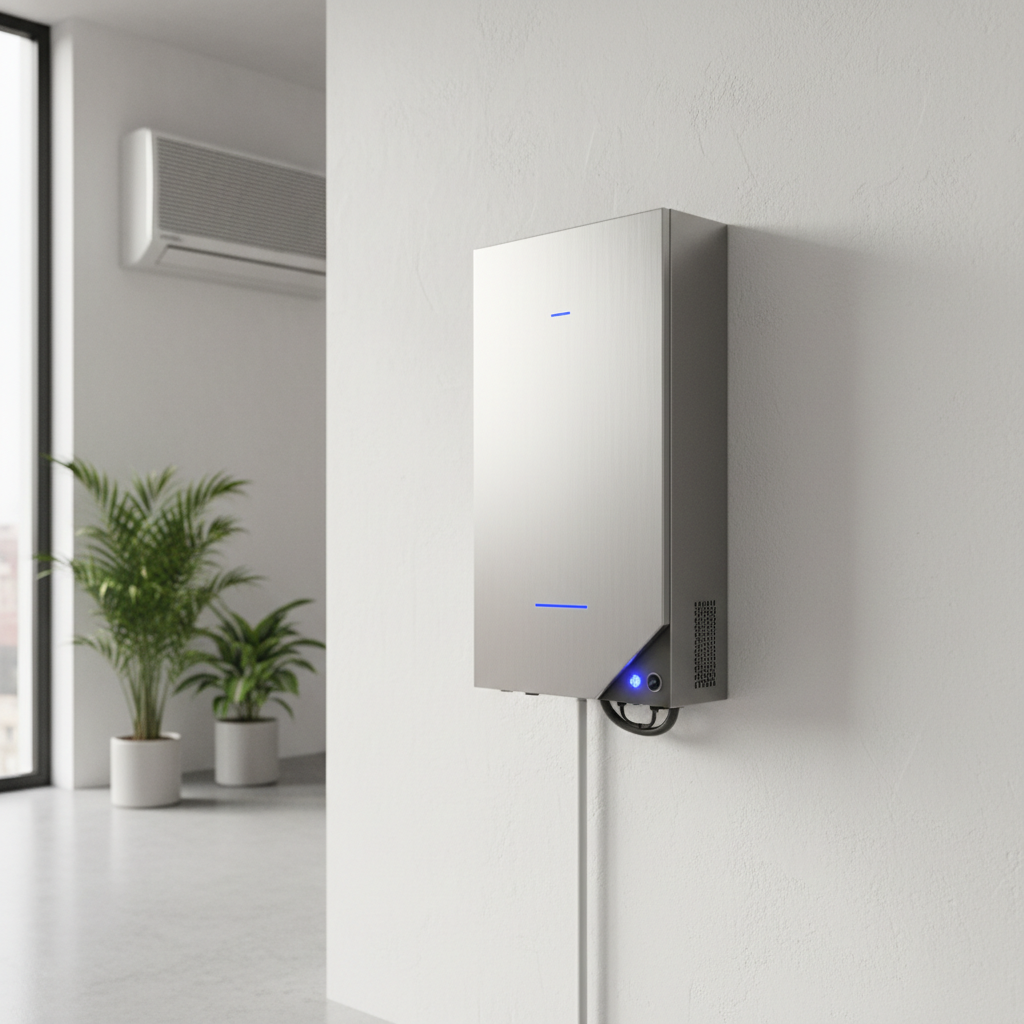
Why this question matters in Nigeria now
As the Nigerian power sector navigates the transition to Band A tariff structures and the removal of fuel subsidies, the cost of cooling has become a significant financial burden for both households and businesses. In Lagos or Abuja, where ambient temperatures frequently exceed 35°C, air conditioning is not a luxury but a productivity requirement. However, the inefficiency of traditional reciprocating compressors, combined with the instability of the grid, makes sizing a storage system complex.
Transitioning to Lithium Iron Phosphate (LiFePO4) technology offers a superior solution compared to legacy Lead-Acid or Gel batteries, yet many installations fail within 18 months due to improper sizing. Understanding the intersection of thermodynamics and electrical engineering is critical for any Lagosian looking to escape the cycle of diesel dependency.
By the numbers: According to BloombergNEF, LiFePO4 battery prices have fallen by over 80% since 2013, yet in the Nigerian market, the total cost of ownership is optimized only when the depth of discharge (DoD) is maintained at 80% to ensure a 10-year lifespan.
Real-world load profile
To understand how to size a LiFePO4 battery storage for inverter air conditioner systems, we must first distinguish between 'Inverter' and 'Non-Inverter' units. A standard 1.5HP AC draws a constant high current. In contrast, an Inverter AC uses a variable speed drive to modulate the compressor, reducing power consumption as the room reaches the set point.
Below is a typical 24-hour load profile for a residential bedroom in a coastal Nigerian city, assuming a high-efficiency 1.5HP Inverter AC unit.
| Time Segment | Activity Level | Avg. Power Draw (Watts) | Total Energy (Wh) |
|---|---|---|---|
| 22:00 - 02:00 | Initial Cooling (High) | 900W | 3,600Wh |
| 02:00 - 06:00 | Maintenance (Low) | 350W | 1,400Wh |
| 06:00 - 09:00 | Morning Prep (Medium) | 500W | 1,500Wh |
| 09:00 - 18:00 | Daytime Idle/Off | 50W (Standby) | 450Wh |
| 18:00 - 22:00 | Evening Pre-cool | 700W | 2,800Wh |
| Total | 9,750Wh (9.75kWh) |
This profile demonstrates that even an efficient AC requires approximately 10kWh of dedicated storage if it is to run largely off-grid during the night.
Inverter sizing math
When sizing the inverter to accompany your LiFePO4 storage, the two primary metrics are Continuous Power Rating and Surge Capacity. Even though Inverter ACs avoid the massive 5x-7x start-up surge of older units, they still exhibit a soft-start ramp-up that can stress undersized inverters.
We utilize the Power Factor (PF) calculation:
Real Power (kW) = Apparent Power (kVA) × PF.
In Nigeria, most high-quality hybrid inverters have a PF of 0.8 to 1.0. For a 1.5HP AC (approx. 1.1kW) and auxiliary loads, a 3.5kVA or 5kVA system is the baseline recommendation.
Engineer's note — Maypatronic Solar Engineering Team recommends always oversized the inverter by at least 25% above the peak simultaneous load. In the Nigerian context, ambient heat inside the inverter cabinet can lead to thermal derating, where a 5kVA inverter may only provide 4kVA of continuous power when internal temperatures exceed 40°C.
For a comprehensive look at pre-configured systems that handle these loads, visit our /bundles#gold section, which is specifically designed for AC-heavy residential profiles.
LiFePO4 battery sizing math
LiFePO4 batteries are sized based on usable energy. Unlike Lead-Acid batteries, which shouldn't be discharged beyond 50%, LiFePO4 can comfortably handle 80% to 90% Depth of Discharge (DoD).
To calculate the required Battery Capacity (Ah) for a 48V system:
- Total Daily Energy (Wh): 10,000Wh (from our table).
- Desired Autonomy: 1 day (no grid/no sun).
- DoD Adjustment: 10,000Wh / 0.8 = 12,500Wh total capacity needed.
- Voltage Conversion: 12,500Wh / 48V = 260.41 Ah.
In this scenario, a 300Ah 48V LiFePO4 bank (or three 100Ah units in parallel) is the ideal technical fit. This ensures the battery is not stressed and maintains its cycle life of 4,000+ cycles.
By the numbers: The International Renewable Energy Agency (IRENA) reports that LiFePO4 batteries maintain 80% of their original capacity after 3,000-5,000 cycles, whereas Lead-Acid batteries often drop below 80% capacity after just 500 cycles in high-temperature environments like Sub-Saharan Africa.
Solar PV array sizing and roof footprint
In Nigeria, we average approximately 4.5 to 5.5 Peak Sun Hours (PSH) depending on whether you are in Port Harcourt or Sokoto. To recharge a 10kWh battery bank while simultaneously powering the daytime loads, the PV array must be sized aggressively.
Calculation:
(Daily Energy Consumption / PSH) / Efficiency Factor = PV kWp
(15,000Wh / 4.5) / 0.8 = 4,166W or 4.2kWp.
Using modern 550W Tier-1 Monocrystalline modules, you would require approximately 8 panels. Each panel has a footprint of roughly 2.6 square meters. Total roof space required: ~21 square meters. It is crucial to account for Harmattan dust, which can reduce output by 15-30% if panels are not cleaned regularly. You can use our /estimator to get a more precise calculation based on your specific roof orientation.
Indicative cost breakdown in NGN
Investing in a system capable of running an Inverter AC requires significant upfront capital, but the operational savings are immense. Below is an indicative breakdown for a High-Efficiency 5kVA/10kWh system.
| Component | Specification | Estimated Price (NGN) |
|---|---|---|
| Hybrid Inverter | 5kVA Pure Sine Wave (48V) | 850,000 - 1,200,000 |
| LiFePO4 Battery | 10kWh (e.g., 200Ah 48V) | 2,800,000 - 3,500,000 |
| Solar Panels | 4.4kWp (8 x 550W Mono) | 1,200,000 - 1,600,000 |
| Balance of System | Cables, Racking, Protection | 400,000 - 600,000 |
| Total Estimate | 5,250,000 - 6,900,000 |
Note: Prices fluctuate based on FX rates and global supply chain conditions. For the most current pricing, check our /shop.
ROI vs diesel generator
With diesel prices hovering between N1,200 and N1,500 per liter, running a 10kVA generator to power a single AC for 10 hours a day is financially unsustainable.
Diesel Cost Analysis:
- Consumption: 2.5 Liters/hour
- Daily Run: 10 Hours = 25 Liters
- Daily Cost: 25L * N1,300 = N32,500
- Monthly Cost: N975,000
In contrast, a solar LiFePO4 system has a payback period of approximately 6 to 9 months when compared to exclusive diesel generation. Even when compared to EKEDP Band A grid tariffs, the ROI is achieved within 24-30 months, providing "free" electricity for the subsequent 8-10 years of the battery's life.
Engineer's note — Maypatronic Solar Engineering Team emphasizes that LiFePO4 batteries include a Battery Management System (BMS). The BMS is the brain that prevents over-voltage during grid surges—a common killer of electronics in Nigeria. By integrating the storage system, you aren't just saving money; you are providing a stabilized power environment for your expensive AC units.
Installation, warranty, and what Maypatronic includes
At Maypatronic, we don't just sell boxes; we deliver engineered solutions. Every AC-optimized system includes:
- Remote Monitoring: Track your battery SoC (State of Charge) and AC consumption from your smartphone via Wi-Fi/GPRS.
- Premium Protection: AC/DC surge arrestors and specialized DC breakers are standard in our /bundles to mitigate the risks of lightning and grid spikes.
- Tier-1 Components: We partner with brands recognized by ESMAP for quality in emerging markets.
- Warranty: A minimum of 5 years on LiFePO4 cells and 25 years linear output warranty on solar modules.
If you are a corporate entity looking to scale this across multiple offices, visit our /business page for tailored procurement and tax-efficient energy leasing options.
FAQ
Can I use a 12V LiFePO4 battery for a 1.5HP AC?
Technically, you can parallel four 12V units to create a 48V bank, but it is not recommended for high-draw appliances like ACs. The high current at 12V leads to significant cable heat and energy loss. A native 48V LiFePO4 rack-mount or wall-mount battery is the standard for cooling applications.
How many hours will a 5kWh battery run my Inverter AC?
Assuming a 1.5HP Inverter AC averages 600W consumption after the room reaches the set temperature, a 5kWh battery (with 80% usable capacity = 4kWh) will last approximately 6.5 hours. For full overnight cooling, a 10kWh bank is advised.
Do I need a stabilizer if I have a solar inverter?
Most modern hybrid inverters have wide input voltage ranges (120V - 280V) and act as high-precision stabilizers. However, we recommend a dedicated surge protector at the distribution board to handle extreme spikes from the Transmission Company of Nigeria (TCN) grid transitions.
Will the Harmattan dust affect my battery charging?
Yes. During the Harmattan season, solar harvest can drop significantly. This means your battery may not reach 100% SoC by sunset. We recommend increasing your PV array size by 20% to compensate for this seasonal dip or utilizing the grid to 'top up' the batteries during low-sun periods.
Can I mix LiFePO4 with my existing Gel batteries?
No. Never mix different battery chemistries or brands. The charge/discharge curves and internal resistances are vastly different, which will lead to the premature failure of the new LiFePO4 cells and potentially fire hazards. Always replace the entire bank at once.
How do I know if my AC is actually an 'Inverter' model?
Check the nameplate on the outdoor unit. It will explicitly state 'Inverter' and usually list a variable cooling capacity (e.g., 3,000 - 12,000 BTU) rather than a single fixed number. Inverter units also use R32 or R410A refrigerant, whereas very old non-inverters used R22.
For a personalized site assessment or to discuss your specific cooling needs, please /contact our engineering office today.
- Electrical servicesCertified installation & audits
- Scrap battery buy-backSame-day pickup + payment
- AI sizing estimatorkVA / kWh in 60 seconds
- Solar bundles5 pre-engineered tiers
- B2B solutionsCommercial & industrial
- Talk to an engineerFree consultation