Real-World Cost of 5kVA Solar System with Lithium Battery in Lagos
Discover the detailed technical breakdown and current pricing for a 5kVA solar power system with LiFePO4 storage in Nigeria. Learn how to eliminate reliance on EKEDC and expensive fuel.
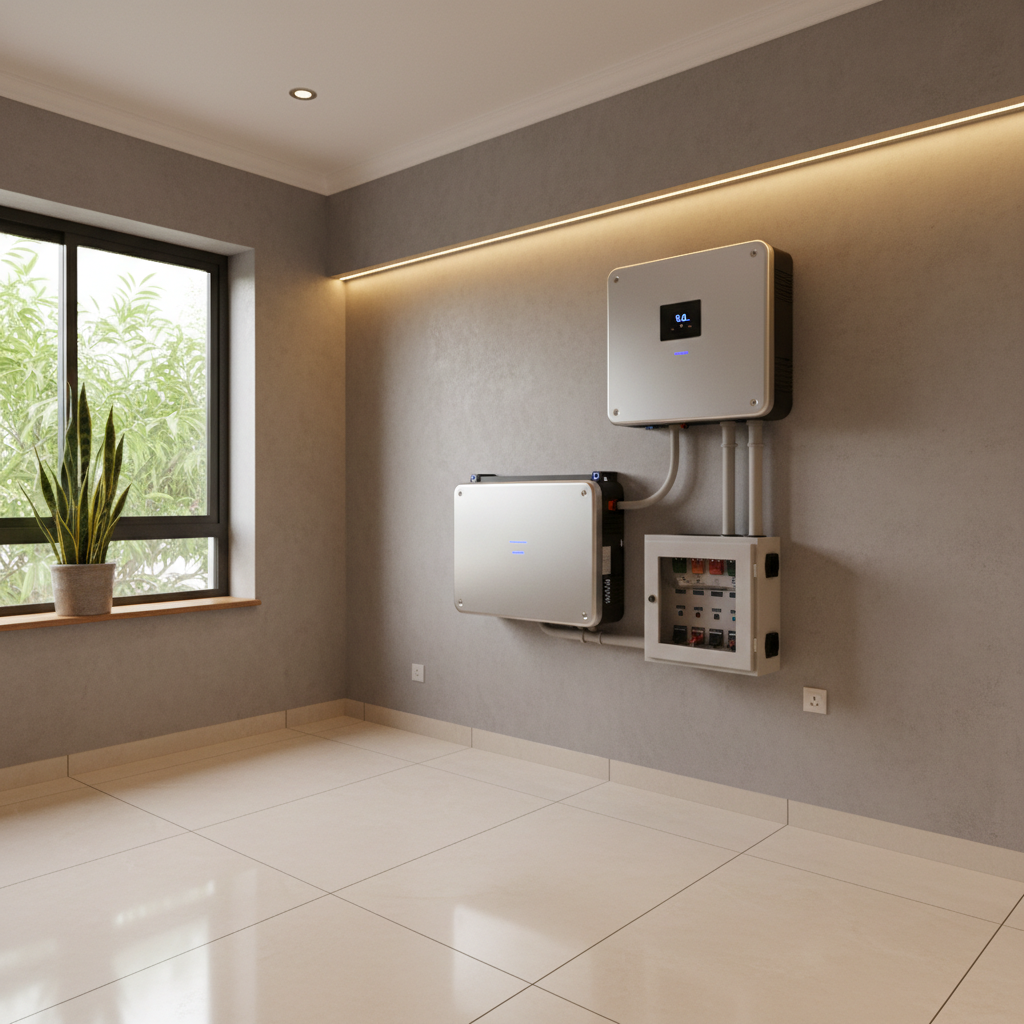
Why this question matters in Lagos right now
For residents and business owners in Lagos, the energy landscape has shifted from a convenience issue to a critical financial burden. Since the removal of fuel subsidies and the upward adjustment of electricity tariffs for Band A customers by the Nigerian Electricity Regulatory Commission (NERC), the operational cost of running a home or office on the grid and petrol generators has tripled within a 12-month period. Choosing a 5kVA solar system is the most common transition point for Band A and Band B consumers looking to mitigate these costs.
In the current Lagos economy, the "cost" of a system is not just the sticker price of the hardware; it is the Net Present Value (NPV) of your energy expenditure over the next 10 years. Traditional lead-acid batteries fail prematurely due to the high ambient temperatures in Lagos (often exceeding 32°C), leading to a high Total Cost of Ownership (TCO). This has necessitated the shift toward Lithium Iron Phosphate (LiFePO4) technology, which offers superior cycle life and thermal stability.
By the numbers: Nigeria's national grid collapsed more than 10 times in 2024 alone, while over 40% of the population remains unconnected or poorly served, according to World Bank ESMAP data. This instability drives the urgent demand for autonomous solar solutions.
Real-world load profile
A 5kVA system is the workhorse of Nigerian residential solar installations. However, calculating the cost of a 5kVA solar system with lithium battery in Lagos requires a precise understanding of what 5kVA actually supports. Many users confuse kVA (Apparent Power) with kW (Real Power). With a typical Power Factor (PF) of 0.8, a 5kVA inverter provides approximately 4,000 Watts of continuous power.
To ensure the longevity of your lithium battery, we design load profiles based on essential circuits and high-surge appliances. Our solar estimator can help you refine these numbers for your specific property. Below is a typical load profile for a 3-bedroom apartment in Lekki or Ikeja:
| Appliance | Wattage | Qty | Hours/Day | Total Wh/Day |
|---|---|---|---|---|
| LED Lighting | 10W | 15 | 6 | 900 |
| Standing Fans | 60W | 4 | 10 | 2,400 |
| Refrigerator (Inverter) | 150W | 1 | 24 | 1,800 |
| Deep Freezer | 200W | 1 | 8 | 1,600 |
| Smart TVs (55") | 120W | 2 | 6 | 1,440 |
| Laptops/Workstation | 65W | 3 | 8 | 1,560 |
| Water Pump (0.5HP) | 375W | 1 | 0.5 | 188 |
| Total Daily Energy | 9,888 Wh (9.9 kWh) |
Inverter sizing math
The heart of the system is the 48V 5kVA hybrid inverter. In the West African context, we prioritize low-frequency pulse-width modulation (PWM) or high-frequency pure sine wave inverters with robust transformer-less designs that can handle the volatile voltage swings common in Lagos. When Eko Electricity Distribution Company (EKEDC) restores power, the surge can hit 280V+; hence, your inverter must have a wide input voltage range (typically 120V - 280V) and integrated Surge Protective Devices (SPD).
Engineering formula for Inverter Sizing:
Continuous Load (W) / Power Factor = kVA Requirement
For a 3,200W peak continuous load: 3200 / 0.8 = 4kVA. A 5kVA unit provides a 25% safety margin, which is essential for handling the inductive start-up currents of refrigerator compressors.
Engineer's note — In Lagos, we often see 5kVA systems fail because users attempt to run 1.5HP non-inverter air conditioners. While a 5kVA inverter can technically handle the surge, it rapidly depletes the battery. We recommend using our silver bundle which is specifically balanced for high-efficiency inverter-type appliances to maximize uptime. — Maypatronic Solar Engineering Team
LiFePO4 battery sizing math
The most significant component in the cost of a 5kVA solar system in Lagos is the Lithium Iron Phosphate (LiFePO4) battery. Unlike old tubular or AGM batteries that only allow 50% Depth of Discharge (DoD), LiFePO4 batteries allow up to 80-90% DoD without significant degradation.
To calculate the required battery capacity for the 9.9 kWh load identified above:
Usable Capacity Needed = Daily Wh / 0.8 (DoD)
10,000 Wh / 0.8 = 12,500 Wh (12.5 kWh)
For a 48V system: 12,500 Wh / 48V = 260Ah.
Typically, we would install two 5.12kWh lithium modules (total 10.24kWh) for a standard 5kVA setup, or a single 10kWh Powerwall-style unit. This provides approximately 10-12 hours of backup for essential loads after sunset.
By the numbers: LiFePO4 batteries maintain over 80% capacity after 4,000 to 6,000 cycles. In contrast, lead-acid batteries often fail within 500 cycles in Nigerian heat. This makes lithium 8x more cost-effective over a 5-year horizon according to BloombergNEF battery price indices.
Solar PV array sizing and roof footprint
Lagos receives an average of 4.5 Peak Sun Hours (PSH) per day, according to NIMET meteorological data. However, this is heavily influenced by the Harmattan season (Dec-Feb) where dust can reduce panel efficiency by 20-30%, and the rainy season (June-July) with heavy cloud cover.
To recharge a 10kWh battery bank and cover daytime loads (total ~15kWh daily requirement):
Required PV Wattage = (Daily Wh / PSH) / System Efficiency (0.8)
(15,000 / 4.5) / 0.8 = 4,166 Watts
We recommend installing 8 to 10 units of 550W Tier-1 Monocrystalline PERC panels. Roof Footprint: Each 550W panel is roughly 2.3 square meters. 8 panels require ~18.4 sqm of unshaded, South-facing roof space. Our B2B solutions team can assist with structural assessments for larger commercial roofs in industrial areas like Agbara or Ikeja.
Indicative cost breakdown in NGN
Note: Prices are subject to exchange rate fluctuations (USD/NGN) and current clearing costs at Apapa/Tin Can ports.
| Line Item | Component Details | Qty | Unit Cost (NGN) | Subtotal (NGN) |
|---|---|---|---|---|
| Inverter | 5kVA 48V Pure Sine Wave Hybrid | 1 | 850,000 | 850,000 |
| Battery | 5.12kWh LiFePO4 (100Ah 48V) | 2 | 1,450,000 | 2,900,000 |
| Solar Panels | 550W Monocrystalline PERC | 8 | 140,000 | 1,120,000 |
| Racking | Aluminum Rail/Roof Mount System | 1 | 250,000 | 250,000 |
| Protection | DC Breakers, SPD, AC Changeover | 1 | 180,000 | 180,000 |
| Installation | Cabling, Trunking, Labour | 1 | 350,000 | 350,000 |
| Estimated Total | 5,650,000 |
For updated daily pricing and availability, check our full product catalogue.
ROI vs diesel generator
In Lagos, running a 10kVA diesel generator for 8 hours daily is now a massive financial drain. With diesel prices hovering between 1,200 and 1,500 NGN per litre, the switch to solar isn't just "green"—it's essential for business survival.
Monthly Diesel Expense Calculation:
- Consumption: 2.5 litres/hour
- 8 hours/day = 20 litres/day
- 20 litres × 1,300 NGN = 26,000 NGN/day
- 26,000 NGN × 25 days/month = 650,000 NGN/month
At a system cost of 5.65 million NGN, the payback period against diesel alone is:
5,650,000 / 650,000 = 8.7 months.
Even when compared against IKEDC/EKEDC Band A tariffs (approx. 209 NGN/kWh), the solar system pays for itself in under 3 years, while providing a 10-year warranty-backed service life on the lithium storage. You can view our silver bundle for a premade package that matches this ROI profile.
Engineer's note — We often advise clients to factor in 'Generator Opportunity Cost.' This include oil changes every 150 hours, AVR replacements, and the noise pollution that impacts productivity in home offices. Solar removes all these variables. — Maypatronic Solar Engineering Team
Installation, warranty, and what Maypatronic includes
When you invest in a 5kVA system through Maypatronic, you are not just buying hardware; you are buying an engineered solution. Our installations comply with the standards set by the Energy Commission of Ghana and Nigeria's technical codes.
Every 5kVA Lithium installation includes:
- Remote Monitoring: Access your system performance via a smartphone app (Wifi/GPRS).
- Protection Suite: Full DC/AC surge protection to guard against lightning and grid spikes.
- Professional Sizing: A site visit to verify roof integrity and cable run distances.
- Support: A dedicated helpdesk for troubleshooting any DisCo/Solar priority settings.
Visit our bundles page to select your tier or contact us to book a site survey in Lagos or Accra today.
FAQ
Can a 5kVA solar system run an Air Conditioner?
Yes, a 5kVA system can run one 1HP or 1.5HP inverter-type air conditioner during the day when the sun is at its peak. However, we do not recommend running ACs on the lithium battery at night unless you have significantly oversized the battery bank (e.g., to 20kWh+). Standard 10kWh storage is designed for essential loads like lights, fans, fridges, and electronics.
How long does the lithium battery last in a 5kVA system?
High-quality LiFePO4 batteries like those found in our shop are rated for 4,000 to 6,000 cycles. If discharged once daily, the battery will last between 10 to 15 years before its capacity drops to 80% of its original rating. This is a 400% improvement over lead-acid alternatives used in older Lagos solar installations.
What is the difference between kVA and kW in solar inverters?
kVA is apparent power, while kW is real power. Most modern 5kVA hybrid inverters have a power factor of 1.0 or 0.8. A 5kVA inverter with a 1.0 PF delivers 5,000W, while one with 0.8 PF delivers 4,000W. Always check the datasheet for the "Rated Output Power" in Watts before purchasing to ensure it meets your load peak.
How many solar panels do I need for a 5kVA lithium system?
To effectively charge a 10kWh lithium battery and run household loads during the day in Lagos, we recommend between 4kW and 5kW of solar panels. This typically translates to 8 or 10 pieces of 550W monocrystalline panels. Reducing the panel count will increase your reliance on the grid or generator during cloudy days.
Does Maypatronic offer financing for solar systems in Lagos?
Yes, we partner with several financial institutions to provide asset financing for renewable energy. We also offer phased installation where you can start with the inverter and lithium battery (using the grid/gen to charge) and add solar panels later as your budget permits. Explore our knowledge base for more on solar financing options.
What maintenance is required for a 5kVA solar system?
Lithium-based systems are virtually maintenance-free. The primary requirement is cleaning the solar panels every 2-4 weeks during the Harmattan season to remove dust buildup, which can significantly derate power production. The inverter and battery should be kept in a well-ventilated, dust-free environment to ensure the cooling fans operate efficiently.
- Electrical servicesCertified installation & audits
- Scrap battery buy-backSame-day pickup + payment
- AI sizing estimatorkVA / kWh in 60 seconds
- Solar bundles5 pre-engineered tiers
- B2B solutionsCommercial & industrial
- Talk to an engineerFree consultation