Solar Panel Prices in Ghana 2027: Engineering & Investment Guide
Analyze the projected solar panel prices in Ghana for 2027 alongside Nigerian market trends to optimize your renewable energy investment today.
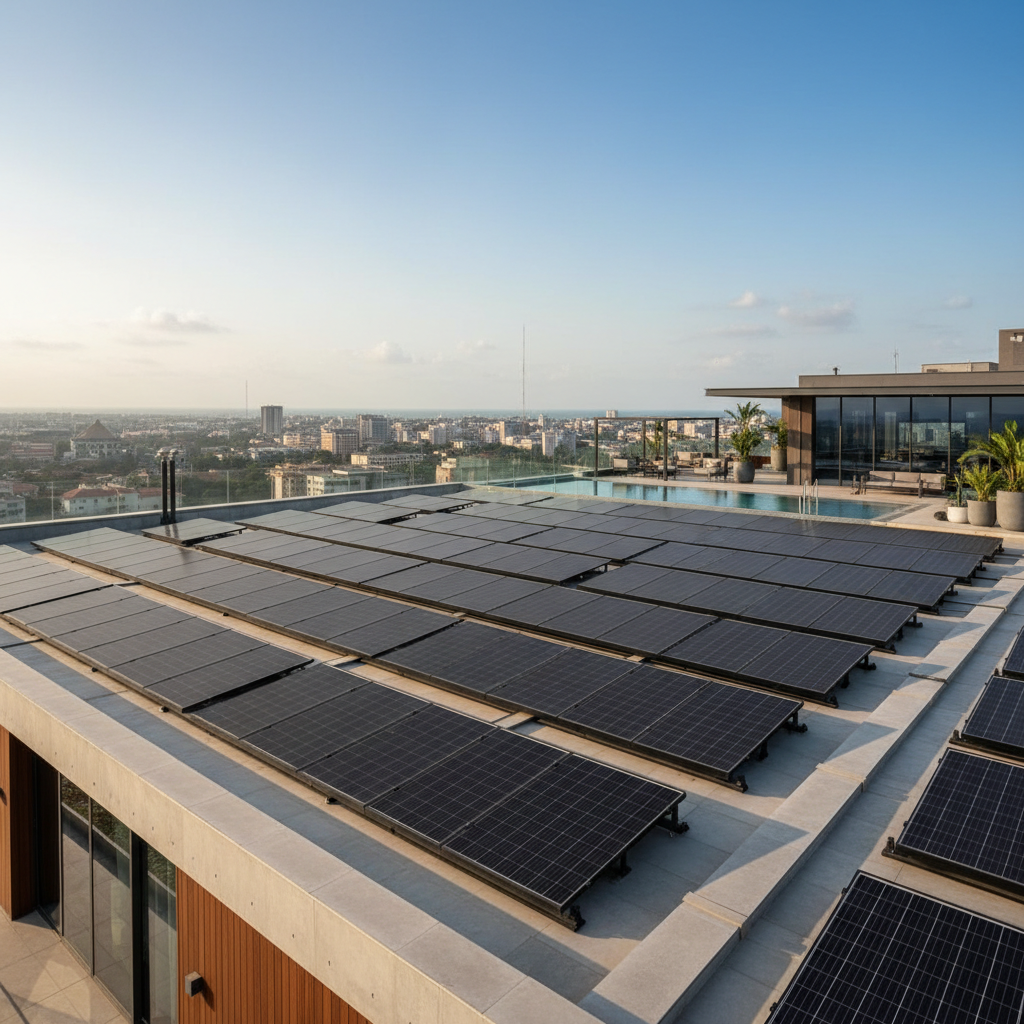
Why Solar Panel Prices in Ghana 2027 and Nigeria Matter Today
Understanding the trajectory of Solar Panel Prices in Ghana 2027 and the parallel market in Nigeria is no longer a luxury—it is a fiscal necessity for homeowners and businesses alike. As the Economic Community of West African States (ECOWAS) pushes for unified energy standards, the price fluctuations in Accra directly signal trends for the Lagos and Abuja markets. Currently, the West African energy landscape is defined by two converging pressures: the removal of fuel subsidies leading to skyrocketing PMS and diesel costs, and the frequent instability of the national grids—managed by the Transmission Company of Nigeria (TCN) and the Electricity Company of Ghana (ECG).
Projecting costs toward 2027 requires an understanding of global silicon supply chains, regional import duties, and the local inflation of the Cedi and Naira. While technology costs generally decrease globally, the localized costs of logistics, high-quality mounting structures, and skilled labor often offset these gains. For the Nigerian consumer, the shift from a 'wait-and-see' approach to immediate adoption is driven by the realization that energy independence is the only hedge against volatile DisCo tariffs.
By the numbers: According to the International Renewable Energy Agency (IRENA), the global levelized cost of electricity (LCOE) for utility-scale solar PV fell by 89% between 2010 and 2022. However, in West Africa, balance-of-system (BOS) costs like cabling and protection gear remain 15-20% higher than global averages due to import constraints.
Real-World Load Profile: Sizing for a Nigerian Household
Before discussing the cost of components, we must define the load. A typical middle-class Nigerian or Ghanaian home does not just need 'solar'; it needs a system designed to handle inductive loads (fridges, ACs) and resistive loads (irons, kettles) while managing the surge currents of water pumps.
Below is a standard load profile for a household considering our /bundles#gold system, which typically utilizes a 5kVA to 10kVA inverter architecture.
| Appliance | Qty | Wattage (W) | Daily Hours | Total Wh/Day |
|---|---|---|---|---|
| LED Bulbs | 15 | 10 | 6 | 900 |
| Standing Fans | 4 | 65 | 10 | 2,600 |
| Smart TV (55") | 2 | 150 | 6 | 1,800 |
| Fridge/Freezer | 1 | 200 | 24 (Cycling) | 2,400 |
| Inverter AC (1HP) | 1 | 800 | 5 | 4,000 |
| Laptop/Office | 2 | 65 | 8 | 1,040 |
| Total Daily Consumption | 12,740 Wh |
This load profile demonstrates that even with energy-efficient appliances, a home requires approximately 13kWh of energy daily. To ensure 24/7 uptime, the system must account for both instantaneous peak power and total energy storage capacity. You can use our /estimator to customize this for your specific square footage.
Inverter Sizing Math: kVA vs. kW and Power Factor
One of the most common mistakes in the West African market is equating kVA with kW. Most budget inverters sold in local markets have a Power Factor (PF) of 0.8. This means a 5kVA inverter can only handle 4kW of continuous real power load.
At Maypatronic, we utilize high-frequency and low-frequency hybrid inverters that prioritize pure sine wave output to protect sensitive electronics from the 'dirty' power often delivered by aging grid infrastructure. When sizing for the Solar Panel Prices in Ghana 2027 outlook, we anticipate a shift toward high-voltage string inverters (400VDC+) which offer higher efficiency than older 48VDC systems.
Engineer's note — Maypatronic Solar Engineering Team
"When we design systems for the Nigerian environment, we never load an inverter beyond 75% of its rated capacity. If your total concurrent load is 3.5kW, a 5kVA (4kW) inverter is the absolute minimum. Operating at the edge of the thermal limit in 35°C ambient Lagos heat leads to premature capacitor failure. Always over-spec the inverter to ensure longevity."
LiFePO4 Battery Sizing Math: The Depth of Discharge (DoD) Factor
By 2027, lead-acid and Gel batteries will be obsolete for residential solar. Lithium Iron Phosphate (LiFePO4) has become the gold standard. To calculate the required battery bank for the 13kWh load identified above, we must factor in the Depth of Discharge (DoD) and Round Trip Efficiency (RTE).
- Total Daily Load: 13,000 Wh
- Desired Autonomy: 1 day (no sun)
- LiFePO4 DoD: 80% (to ensure 4,000+ cycles)
- Calculation: 13,000 / 0.8 = 16,250 Wh (or 16.25kWh)
For a 48V system, this equates to 16,250 / 48 ≈ 340Ah. Thus, a combination of three 100Ah 48V lithium bricks or one 300Ah Powerwall would be required.
By the numbers:
According to BloombergNEF, lithium-ion battery pack prices fell to an average of $139/kWh in 2023. By 2027, we project that landed and cleared LiFePO4 storage in West Africa will reach a price equilibrium that makes the ROI vs. petrol generators less than 18 months.
Solar PV Array Sizing and Roof Footprint
Sizing the panels requires an understanding of Peak Sun Hours (PSH). In Nigeria and Southern Ghana, PSH averages around 4.5 to 5 hours daily, accounting for seasonal cloud cover and harmattan dust.
To recharge a 16kWh battery bank and cover a 13kWh daytime load, the solar array must produce approximately 20kWh to 25kWh per day to account for system losses (cabling, MPPT efficiency, and heat derating).
Calculation: 25,000 Wh / 4.5 PSH = 5,555 Watts of Solar PV.
Using modern 550W Tier-1 Monocrystalline PERC modules, you would need: 5,555 / 550 ≈ 10 to 12 Panels.
Footprint: Each 550W panel is roughly 2.2 square meters. A 10-panel array requires 22 square meters of clear, unshaded roof space. In Lagos, we recommend a tilt of 5° to 15° facing South to maximize year-round yield. For those in more dust-prone areas, regular cleaning is mandatory as harmattan soot can reduce output by up to 30%. Visit our /shop to see the latest high-efficiency modules available.
Indicative Cost Breakdown in NGN (2024 vs 2027 Projections)
The following table compares the current market costs for a professional 5kVA/10kWh Lithium system versus the projected Solar Panel Prices in Ghana 2027 adjusted for the Nigerian market.
| Component | 2024 Cost (Est. NGN) | 2027 Projection (Est. NGN) | Notes |
|---|---|---|---|
| 5kVA Hybrid Inverter | 850,000 - 1.2M | 1.1M - 1.5M | Inflation vs Tech drop |
| 10kWh LiFePO4 Battery | 2.8M - 3.5M | 2.2M - 2.8M | Scale of production |
| 5.5kW Solar Array | 1.5M - 2.0M | 1.3M - 1.8M | Efficiency gains |
| Protection Gear/AC-DC | 300,000 | 450,000 | Copper price increases |
| Installation/Logistics | 250,000 | 400,000 | Labor cost trends |
| Total System Cost | ~5.7M - 7.2M | ~5.45M - 6.95M | Expected Stability |
Note: These are estimates based on current Central Bank of Nigeria (CBN) forex trends and international shipping rates. Actual prices for our /bundles#gold may vary based on specific site requirements.
ROI vs. Diesel Generator: The True Cost of Power
Comparing a solar investment to a diesel generator requires looking at the Total Cost of Ownership (TCO) over 5 years. A 10kVA diesel generator consumes roughly 1.5 to 2 liters per hour. At current NGN prices for diesel, running a generator for 10 hours a day costs approximately N15,000 to N20,000 daily—excluding servicing, oil filters, and the inevitable engine overhaul.
Over 5 years, the fuel alone for a generator would exceed N27 million. In contrast, a solar system with a 25-year panel warranty and 10-year battery design life pays for itself within 2 to 3 years.
Engineer's note — Maypatronic Solar Engineering Team
"The 'hidden' cost of generators isn't just fuel; it's the damage to your home's electrical health. We frequently replace burnt-out AV receivers and AC compressors caused by the fluctuating frequency (Hz) of low-grade generators. A solar inverter provides a steady 50Hz, acting as a massive stabilizer for your entire building."
Installation, Warranty, and What Maypatronic Includes
When you invest in a Maypatronic system, you are not just buying hardware; you are buying an engineered solution. Our installation standards follow the Nigerian Electricity Regulatory Commission (NERC) safety guidelines and international IEC standards.
Our service includes:
- Site Audit: Drone-assisted roof shading analysis.
- Tier-1 Hardware: We only stock brands that provide verifiable flash-test reports for every panel.
- Remote Monitoring: Most of our /bundles include Wi-Fi logging, allowing our engineers to diagnose your system remotely before you even notice a fault.
- After-Sales Support: A dedicated technician for your region, ensuring that 'dumsor' (in Ghana) or grid collapse (in Nigeria) never leaves you in the dark.
To explore how we can tailor a system for your commercial facility, visit our /business page or /contact us for a bespoke quote.
Frequently Asked Questions (FAQ)
How do Solar Panel Prices in Ghana 2027 compare to Nigeria?
Historically, Ghana has lower import duties on finished renewable energy products, making the baseline price slightly lower. However, Nigeria's larger market volume often allows for better bulk pricing on batteries. By 2027, we expect prices to equalize across the ECOWAS region as trade barriers diminish.
Can I run my Air Conditioner on solar 24/7?
Yes, but it requires a larger battery bank. A standard 1.5HP inverter AC uses about 1.2kW. To run this for 10 hours at night, you would need 12kWh of dedicated battery storage just for the AC, in addition to your other household loads. We recommend our Diamond or Platinum /bundles for full AC support.
What happens to the panels during a Harmattan dust storm?
Output will drop significantly—sometimes by 40%. Our systems include high-voltage MPPT controllers that can still harvest energy even in low-light conditions, but we recommend a simple water-wash of the panels every 2-3 weeks during the peak of the dust season.
Is it better to buy now or wait until 2027 for lower prices?
While technology prices drop, the local inflation of the Naira and Cedi often outpaces these reductions. Furthermore, the money saved on fuel over the next three years far outweighs any potential 10% drop in panel prices. The best time to transition is always 'now' to begin your ROI cycle. Check our /blog for more timing analyses.
What is the lifespan of the Lithium batteries used by Maypatronic?
We use LiFePO4 cells rated for 4,000 to 6,000 cycles. If you discharge your battery once a day, this equates to roughly 10 to 15 years of usable life before the capacity drops to 80% of its original rating.
Does Maypatronic offer financing for these systems?
We partner with several financial institutions to provide solar credit facilities for qualified homeowners and businesses. This allows you to pay for the system using the money you would have otherwise spent on monthly electricity bills and fuel. Contact our team at /contact for current financing partners.
- Electrical servicesCertified installation & audits
- Scrap battery buy-backSame-day pickup + payment
- AI sizing estimatorkVA / kWh in 60 seconds
- Solar bundles5 pre-engineered tiers
- B2B solutionsCommercial & industrial
- Talk to an engineerFree consultation