Solar Panels Prices in Nigeria 2026: The Complete Engineering Guide
Analyze solar panels prices in Nigeria 2026 with detailed engineering math, ROI versus diesel generators, and specific costs for high-efficiency LiFePO4 systems.
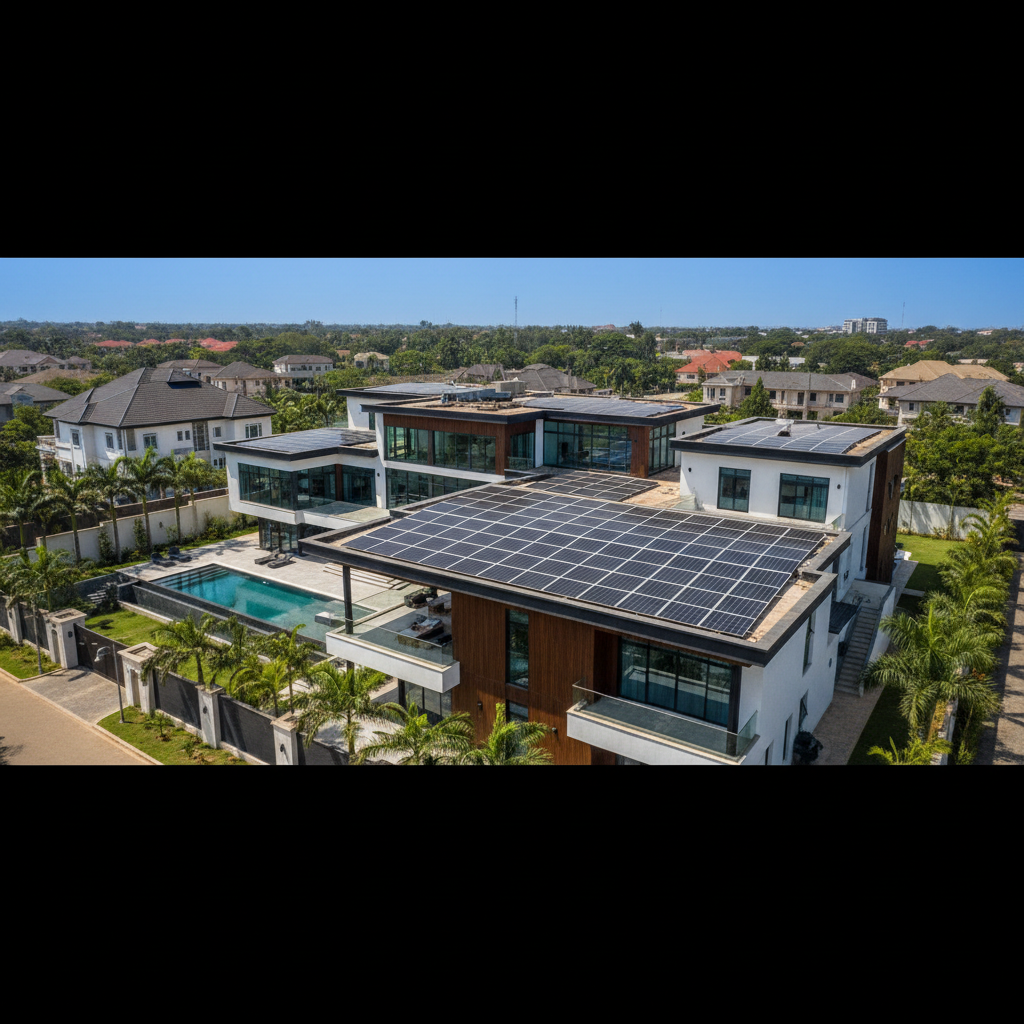
Why This Question Matters in Nigeria Now
As we approach 2026, the Nigerian energy landscape has undergone a seismic shift. The transition from heavily subsidized electricity to a market-driven pricing model, overseen by the Nigerian Electricity Regulatory Commission (NERC), has forced residential and commercial consumers to re-evaluate their relationship with the grid. With Band A tariffs reaching unprecedented heights and the volatility of Premium Motor Spirit (PMS) and Automotive Gas Oil (AGO) prices, solar is no longer a luxury—it is a financial hedge against inflation.
By the numbers: According to recent data from the International Renewable Energy Agency (IRENA), the levelized cost of electricity (LCOE) for residential solar in Africa has dropped by over 80% in the last decade, yet local logistics and import duties in Nigeria create a unique pricing floor. Source: IRENA Power Generation Costs 2023.
Understanding solar panels prices in Nigeria 2026 requires more than a simple price tag. It requires an analysis of the global supply chain, local clearing costs at Lagos ports, and the technological shift from polycrystalline modules to N-Type TOPCon and HJT (Heterojunction Technology) cells which now dominate the market for their superior performance in the high-ambient temperatures of West Africa.
Real-World Load Profile
Before discussing costs, we must define what a "standard" Nigerian home requires. A typical 3 or 4-bedroom bungalow in Lagos or Abuja does not just need "solar"; it needs a system capable of handling inductive loads (compressors) and sustained baseline consumption. We categorize these into three tiers: Essential, Comfort, and Full Autonomy.
| Load Category | Typical Appliances | Estimated Daily Consumption (kWh) |
|---|---|---|
| Essential | LED Bulbs, Fans, TV, Fridge, Laptops | 6 - 8 kWh |
| Comfort | All above + 1 Inverter AC (1.5 HP) + Pumping Machine | 15 - 20 kWh |
| Full Autonomy | Multiple ACs, Electric Cooker, Washing Machine, Deep Freezer | 35+ kWh |
For most users looking at our /bundles#gold package, the focus is on the "Comfort" tier. This ensures that the household remains functional during grid collapses or planned load shedding by DisCos like Eko Electricity Distribution Company (EKEDP).
Inverter Sizing Math
Inverter selection is the heart of your system. In 2026, the industry has shifted almost entirely to high-frequency pure sine wave inverters with integrated MPPT (Maximum Power Point Tracking) controllers. When calculating size, we must distinguish between kVA (Apparent Power) and kW (Real Power).
Most budget inverters have a Power Factor (PF) of 0.8. Thus, a 5kVA inverter only provides 4kW of usable continuous power. However, premium systems like those found in our /shop utilize a PF of 1.0, meaning 5kVA equals 5kW.
Engineer's note — Maypatronic Solar Engineering Team: Always size your inverter for the peak starting current (surge) of your largest motor. A 1.5HP AC might run at 1.2kW, but its compressor startup can spike to 3.5kW for several milliseconds. If your inverter lacks a 2x surge rating, the MOS-FETs will eventually fail under thermal stress. We recommend a minimum 5kVA system for any home using an air conditioner.
To calculate your required capacity:
- Sum all continuous watts (Total W).
- Identify the highest surge appliance (Surge W).
- Inverter Size = (Total W - Highest Appliance W) + Surge W.
LiFePO4 Battery Sizing Math
By 2026, Lead-Acid and Gel batteries have become obsolete for serious solar installations in Nigeria due to their short lifespan in heat. Lithium Iron Phosphate (LiFePO4) is the gold standard. When evaluating solar panels prices in Nigeria 2026, the battery bank often accounts for 40-50% of the total cost.
By the numbers: LiFePO4 batteries offer up to 6,000 cycles at 80% Depth of Discharge (DoD), compared to just 500-800 cycles for premium Gel batteries at 50% DoD. This represents a 10x improvement in lifetime value. Source: BloombergNEF.
The Math: If your daily night-time consumption is 10kWh and you want to use 80% of your battery: Required Capacity = 10kWh / 0.80 = 12.5kWh. In a 48V system, this translates to: (12,500Wh / 48V) = 260Ah. Therefore, a 300Ah 48V Lithium bank or three 100Ah 48V units in parallel would be the engineered solution.
Solar PV Array Sizing and Roof Footprint
Nigeria enjoys an average of 4.5 to 6 Peak Sun Hours (PSH) depending on whether you are in Port Harcourt or Kano. In the south, we design for 4.5 PSH to account for cloud cover and the intense harmattan dust which reduces irradiance.
To recharge a 15kWh battery bank and power a 2kW daytime load:
- Daytime Load: 2kW * 6 hours = 12kWh.
- Battery Recharge: 15kWh / 0.9 (charging efficiency) = 16.6kWh.
- Total daily energy needed from panels: 28.6kWh.
- Required Solar Array = 28.6kWh / 4.5 PSH = 6.35kWp.
Using modern 600W+ Monocrystalline N-Type panels, you would need approximately 11 panels. Each panel measures roughly 2.3 square meters. Roof Footprint: 11 panels * 2.3 sqm = 25.3 square meters of clear, south-facing roof space.
For a detailed assessment of your specific roof orientation, use our Solar Load Estimator.
Indicative Cost Breakdown in NGN
While prices fluctuate based on the NGN/USD exchange rate, the following table provides an engineered estimate for a high-quality 5kVA/10kWh system (our /bundles#gold equivalent) in 2026.
| Component | Specifications | Estimated Cost (NGN Millions) |
|---|---|---|
| Solar Panels | 6kWp (N-Type 600W+) | 2.4 - 3.0 |
| Inverter | 5kVA Pure Sine Wave MPPT | 1.2 - 1.8 |
| Battery | 10kWh LiFePO4 (Wall-mount) | 4.5 - 5.5 |
| Balance of System | Racking, DC Cables, Surge Protectors | 0.6 - 0.9 |
| Installation/Logistics | Professional Commissioning | 0.3 - 0.5 |
| Total Estimated | Complete Hybrid System | 9.0 - 11.7 |
Note: These prices reflect Tier-1 equipment with 5-10 year warranties. Substandard components may be 30% cheaper but carry high failure risks in the Nigerian climate.
ROI vs Diesel Generator
One of the most frequent questions we receive at our /business division is the payback period. With diesel prices stabilized at high levels, the math heavily favors solar.
Running a 10kVA Diesel Generator for 8 hours a day:
- Consumption: ~2.5 Liters/hour = 20 Liters/day.
- Daily Cost: 20L * NGN 1,300/L = NGN 26,000.
- Monthly Cost: NGN 780,000.
- Annual Cost: NGN 9.36 Million.
Engineer's note — Maypatronic Solar Engineering Team: The capital expenditure (CAPEX) of a premium solar system is roughly equivalent to 12-14 months of diesel fuel costs for a medium-sized home. When you factor in the 20-year lifespan of the panels and 10-year lifespan of the lithium batteries, your electricity becomes essentially 'free' after the second year. This does not even account for the maintenance costs of internal combustion engines or the health impact of noise and fumes.
Furthermore, the Energy Sector Management Assistance Program (ESMAP) highlights that distributed solar is the most resilient way to combat the frequent grid collapses seen on the Transmission Company of Nigeria (TCN) network.
Installation, Warranty, and What Maypatronic Includes
Investing in solar is not just about buying hardware; it is about securing an energy future. At Maypatronic, our installation protocol exceeds standard electrical codes to ensure safety in the high-humidity environments of coastal Nigeria.
Our /bundles include:
- Tier-1 N-Type Solar Modules: Resistant to PID (Potential Induced Degradation) and LID (Light Induced Degradation).
- High-Voltage LiFePO4 Storage: Designed for high ambient temperatures with active BMS (Battery Management Systems).
- Lightning Protection: Including DC surge arrestors and copper earth rods, essential for the Nigerian rainy season.
- Remote Monitoring: Access your system's performance via smartphone from anywhere in the world.
For customized commercial quotes or large-scale residential projects, we encourage you to visit our /contact page to speak with a senior design engineer. You can also explore our blog for more technical deep dives into specific brands and emerging energy policies in West Africa.
FAQ
How does the Harmattan season affect solar panels prices in Nigeria 2026?
While it doesn't affect the purchase price, it affects the 'price per generated kWh.' Dust accumulation can reduce efficiency by 25-30%. We recommend bi-weekly cleaning during the dry season to maintain your ROI. Modern panels with anti-soiling coatings are available in our /shop for these specific conditions.
Can I run my 2HP Air Conditioner on a 5kVA solar system?
Yes, provided you use an Inverter-type AC. Traditional non-inverter ACs have massive start-up currents that can trip a 5kVA system. An inverter AC ramps up slowly, making it compatible with the /bundles#gold system.
Why are Lithium batteries so much more expensive than Tubular batteries?
Lithium (LiFePO4) is a technology purchase, whereas Lead-Acid is a commodity purchase. You are paying for 10 years of energy upfront. Tubular batteries usually fail within 18-24 months in Nigeria due to depth-of-discharge mismanagement and heat, making them more expensive in the long run.
Is it possible to sell excess power back to the grid in Nigeria by 2026?
Under the new Electricity Act, Net Metering is becoming a reality in certain DisCo regions. However, it requires a smart bi-directional meter and a grid-tie compliant inverter. Contact our /business team to see if your location is currently eligible for feed-in tariffs.
How do I know if the solar panels I am buying are genuine?
Counterfeit panels are a major issue. Always check the flash test report, ensure the serial number is verifiable on the manufacturer's portal, and buy from authorized distributors like Maypatronic. Genuine Tier-1 panels will have a 25-year linear power warranty.
What happens to the system during a total grid collapse (Blackout)?
Our hybrid systems are designed to disconnect from the grid automatically (islanding) and continue powering your home from the solar/battery bank without interruption. You won't even notice the grid has gone down.
- Electrical servicesCertified installation & audits
- Scrap battery buy-backSame-day pickup + payment
- AI sizing estimatorkVA / kWh in 60 seconds
- Solar bundles5 pre-engineered tiers
- B2B solutionsCommercial & industrial
- Talk to an engineerFree consultation