Top 10 Solar Companies in Accra Ghana 2026: The Definitive Guide
Discover the top 10 solar companies in Accra, Ghana for 2026. Compare professional engineering standards, ROI, and system reliability for your home or business.
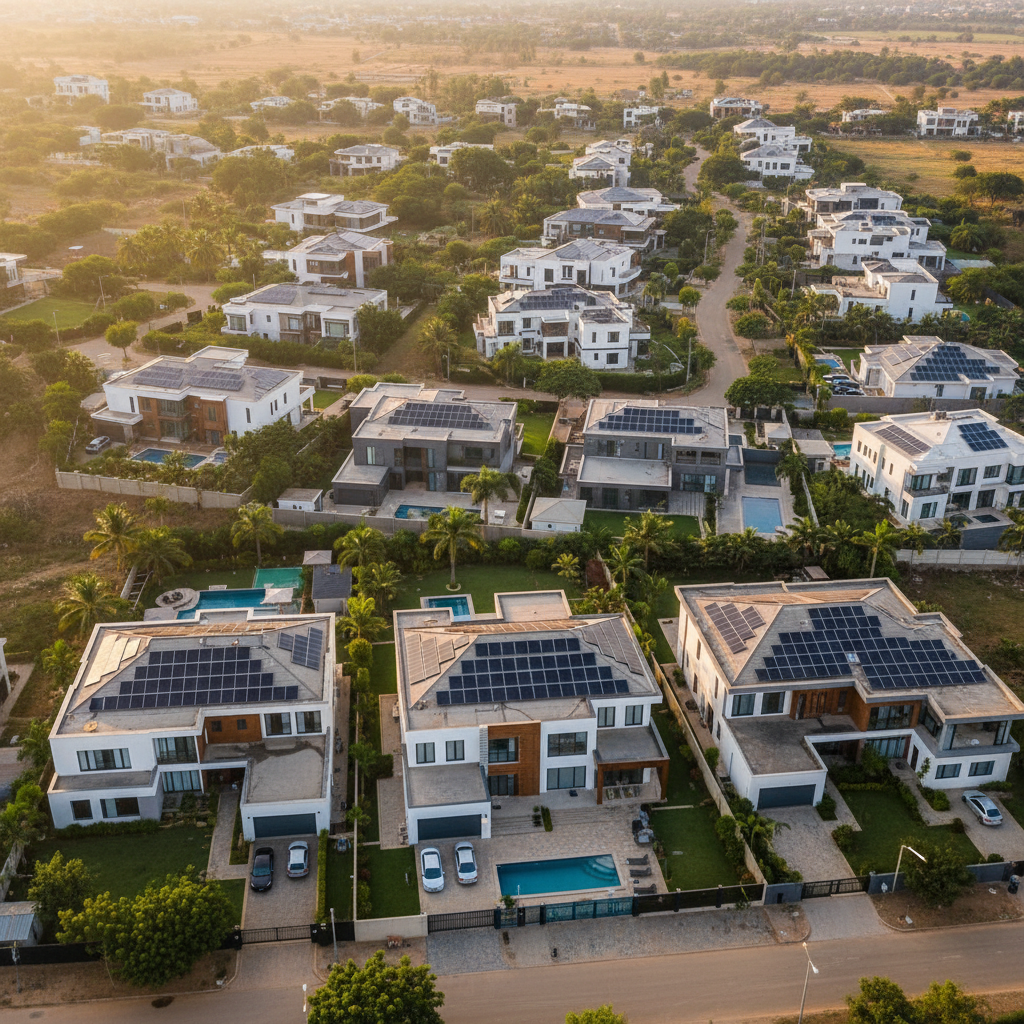
Why this question matters in Nigeria and Ghana now
As we approach 2026, the energy landscape in West Africa has shifted from a luxury convenience to a fundamental economic necessity. In Nigeria, the removal of the fuel subsidy and the persistent volatility of the Naira have pushed the cost of running a premium PMS or Diesel generator beyond the reach of many Small and Medium Enterprises (SMEs). Simultaneously, in Ghana, the Electricity Company of Ghana (ECG) continues to face infrastructure challenges, leading to intermittent power supply popularly known as 'Dumsor.'
According to the World Bank ESMAP, Nigeria remains the country with the largest energy access deficit globally, while Ghana, despite higher electrification rates, struggles with the rising cost of generation. For residents in Accra and Lagos, the transition to solar is no longer just about 'going green'; it is about price stability. The International Renewable Energy Agency (IRENA) highlights that utility-scale and residential solar costs have dropped by over 80% in the last decade, making it the most viable alternative to the failing grid systems managed by DisCos like EKEDP or the grid instability under the Transmission Company of Nigeria (TCN).
By the numbers: As of 2024/2025, the average cost of self-generation via diesel in West Africa has surged to over NGN 850/kWh (approx. $0.60/kWh), compared to a levelized cost of energy (LCOE) for solar-plus-storage which sits at approximately NGN 180-250/kWh over a 20-year lifespan. Source: BloombergNEF.
Identifying the top 10 solar companies in Accra, Ghana for 2026 requires looking past mere marketing to the core of engineering excellence, after-sales support, and Tier-1 component sourcing. The market has matured, and the players listed below represent the pinnacle of reliability in the region.
- Maypatronic Solar & Renewable Energy: Leading the pack with cross-border operations in Lagos and Accra, providing high-efficiency LiFePO4 systems and professional-grade engineering.
- Redavia Solar: Specialists in modular solar farms for commercial and industrial (C&I) clients.
- Bui Power Authority: While primarily a state agency, their leadership in hydro-solar hybridization sets the national standard.
- PEG Africa: Dominant in the pay-as-you-go (PAYG) sector for rural and peri-urban areas.
- Suncity Energy: Known for robust residential installations and high-quality inverter distributions.
- Equator Energy: A major player in the commercial PPA (Power Purchase Agreement) space.
- Senergy Solutions: Focused on high-end residential energy management systems.
- Burro: A versatile provider of solar lighting and small-scale power solutions.
- Dutch & Co: Specialized in energy efficiency audits and commercial solar PV.
- Tino Solutions: A key distributor and installer of global brands like Victron and Fronius in the Ghanaian market.
Real-world load profile
Before selecting an installer from the list of top 10 solar companies in Accra, Ghana 2026, a homeowner must understand their load profile. An incorrectly sized system is the primary cause of premature battery failure. In West Africa, we categorize loads into 'Essential' (lights, fans, internet, security) and 'Heavy' (ACs, pumping machines, water heaters).
Below is a standard load profile for a 3-bedroom apartment in Accra or Lagos using our /bundles/gold configuration:
| Appliance | Wattage (W) | Quantity | Hours/Day | Total Daily Wh |
|---|---|---|---|---|
| LED Bulbs | 10 | 15 | 8 | 1,200 |
| Standing Fans | 60 | 4 | 10 | 2,400 |
| Inverter Refrigerator | 150 | 1 | 24 | 3,600 |
| 55" LED TV | 120 | 1 | 6 | 720 |
| Laptop Charger | 65 | 2 | 4 | 520 |
| Inverter AC (1.5 HP) | 1,100 | 1 | 5 | 5,500 |
| Total | 13,940 Wh (13.94 kWh) |
Selecting the right /bundles depends on whether you intend to run that AC during the day or through the night. Our /bundles#gold package is specifically engineered to handle these daytime surges while preserving battery depth-of-discharge (DoD).
Inverter sizing math
Inverter selection is often where consumers are misled. An inverter rated at 5kVA is not necessarily a 5kW machine. In electrical engineering, the Power Factor (PF) determines the usable wattage. Most high-quality inverters like those used at Maypatronic have a PF of 1.0 (5kVA = 5kW), but many budget brands have a PF of 0.8 (5kVA = 4kW).
When sizing for the West African climate, we must also account for 'Temperature Derating.' If an inverter is installed in a poorly ventilated room in Accra where ambient temperatures hit 35°C, its efficiency drops.
Engineer's note — Always ensure your inverter is sized at least 25% above your peak concurrent load. If your total load is 4kW, do not use a 4kW inverter. Inductive loads like fridge compressors have a 'startup surge' that can be 3x the running wattage. We recommend our 8kVA systems for homes with multiple refrigeration units. Check our /shop for latest pure sine wave models.
For a system to be reliable, it must handle the 'Harmattan' season. During these months, the Nigerian Meteorological Agency (NiMet) and its Ghanaian counterparts record high particulate matter in the air. This dust settles on panels, reducing yield by up to 30%. Your inverter must be smart enough to manage these fluctuations without tripping.
LiFePO4 battery sizing math
The industry has moved away from Lead-Acid and Gel batteries due to their short lifespan (1-2 years) in high-heat environments. Lithium Iron Phosphate (LiFePO4) is now the gold standard for the top 10 solar companies in Accra, Ghana 2026.
To calculate your battery needs, use the formula: Battery Capacity (kWh) = (Daily Consumption x Days of Autonomy) / (DoD x Efficiency)
If your night-time load is 8kWh and you want to use 80% of your battery (DoD) with a 95% Round Trip Efficiency (RTE): Size = 8 / (0.80 x 0.95) = 10.52 kWh
By the numbers: LiFePO4 batteries offer ~4,000 to 6,000 cycles at 80% Depth of Discharge. In contrast, Lead-Acid batteries typically offer only 500-800 cycles at 50% DoD. This makes Lithium approximately 4x cheaper over a 5-year period despite the higher upfront cost. Source: IEA Technology Report.
At Maypatronic, our /bundles#gold and /bundles#platinum systems utilize 10kWh to 20kWh lithium stacks to ensure that even during a consecutive rainy day in Accra, your essential services remain powered.
Solar PV array sizing and roof footprint
In Accra and Lagos, we average about 4.5 Peak Sun Hours (PSH) annually. This is the effective number of hours where the sun is at 1000W/m² intensity. To recharge a 10kWh battery and run a 5kW daytime load, you cannot simply have 5kW of panels. You must account for system losses (cabling, dust, inverter conversion).
Required PV (kWp) = (Daily Wh / PSH) x 1.2 (Safety Factor) Required PV = (14,000 / 4.5) x 1.2 = 3.73 kWp
However, to ensure the battery reaches 100% by 2:00 PM (before the afternoon clouds roll in), we typically oversize the array to 5.5kWp for a 5kVA system.
Roof Footprint: A modern 550W Tier-1 Monocrystalline panel is roughly 2.2 square meters. A 5.5kWp array (10 panels) requires approximately 22-25 square meters of unshaded roof space. Before visiting our /business page for a corporate quote, measure your roof to ensure you have the orientation (ideally South-facing at a 5-15 degree tilt) required for maximum yield.
Indicative cost breakdown in NGN
Costs in 2026 are influenced by global silicon prices and local import duties set by the Nigeria Customs Service and the Ghana Revenue Authority. Below is an indicative breakdown for a 5kVA / 10kWh Lithium system.
| Component | Description | Estimated Price (NGN) |
|---|---|---|
| Inverter | 5kVA Pure Sine Wave (High Frequency) | 950,000 - 1,400,000 |
| Battery | 10kWh LiFePO4 (Wall-mount) | 3,800,000 - 4,500,000 |
| Solar Panels | 5.5kWp (Tier-1 Mono Perc) | 1,800,000 - 2,200,000 |
| Protection | Surge Arrestors, DC/AC Breakers, Rails | 450,000 - 600,000 |
| Installation | Professional Labour & Cabling | 350,000 - 500,000 |
| Total | Approximate Range | 7.3M - 9.2M |
Note: Prices fluctuate based on exchange rates. Use our /estimator for real-time pricing.
ROI vs diesel generator
Many clients ask if the millions spent upfront are worth it. Let's look at the operational expenditure (OPEX) of a 10kVA diesel generator vs. a Solar /bundles#gold system over 5 years.
Generator Costs:
- Initial Purchase: NGN 1,500,000
- Fuel (5L/day @ N1,200/L): NGN 2,190,000 per year
- Servicing (Monthly): NGN 360,000 per year
- 5-Year Total: NGN 14,250,000
Solar Costs:
- Initial Setup: NGN 8,500,000
- Maintenance (Cleaning panels): NGN 50,000 per year
- 5-Year Total: NGN 8,750,000
Engineer's note — The ROI on solar in the current Nigerian economy is typically reached between 24 and 30 months. Beyond that point, your electricity is essentially free. Furthermore, the 'Silent ROI'—the health benefits of no noise pollution and no carbon monoxide fumes—is immeasurable. If you are a business owner, please see our /business section for tax depreciation benefits on renewable energy assets.
Installation, warranty, and what Maypatronic includes
Being among the top 10 solar companies in Accra, Ghana 2026 isn't just about selling hardware; it's about the warranty. At Maypatronic, we provide:
- 5-Year Warranty on Lithium batteries.
- 10-Year Warranty on Solar panel performance.
- 2-Year Warranty on Inverters.
- Remote Monitoring: We can see your system's health from our Lagos or Accra offices and often fix settings before you even notice a glitch.
Our /bundles are designed to be plug-and-play for our certified installers. Whether you are in East Legon, Accra, or Lekki, Lagos, our standards remain identical. We use double-insulated DC cables and Schneider-electric AC breakers to ensure your house never faces a fire hazard—a common issue with 'cheap' installers.
If you are ready to stop donating money to the DisCos and diesel suppliers, you can /contact our engineering team today for a site audit.
FAQ
Can I run my Air Conditioner on solar?
Yes, but it requires proper sizing. A 1.5HP Inverter AC uses about 1kW while running. A 5kVA system can comfortably run one AC during the day. For night-time AC use, you will need at least 15kWh to 20kWh of battery storage. See our /bundles#platinum for AC-optimized setups.
How do I clean my solar panels during the Harmattan?
Use a soft mop and clean water. Avoid using harsh detergents or abrasive brushes which can scratch the glass and reduce efficiency. We recommend cleaning twice a month during the peak dust season in Accra.
Is it better to stay on the grid or go 100% off-grid?
For most urban residents, a 'Hybrid' system is best. You use the grid when it's available (at lower Band A or B rates), solar during the day, and batteries at night. This extends the life of your batteries significantly. Use our /estimator to see which mode suits your pocket.
Why is Lithium so much more expensive than Gel batteries?
Upfront cost is higher, but the cost-per-cycle is significantly lower. A Gel battery will give you ~500 cycles. A Lithium battery gives you 5,000. You would have to buy 10 sets of Gel batteries to match the lifespan of one Lithium battery.
What happens if the sky is cloudy for three days?
Solar panels still produce electricity in diffuse light (cloudy days), but at about 10-25% of their capacity. A properly sized system from the top 10 solar companies in Accra, Ghana 2026 includes 'autonomy'—extra battery capacity to carry you through such periods.
Do you offer payment plans?
Yes, Maypatronic works with several financial partners in both Nigeria and Ghana to provide asset financing for qualified residential and /business clients. Contact us via /contact for the latest financing requirements.
- Electrical servicesCertified installation & audits
- Scrap battery buy-backSame-day pickup + payment
- AI sizing estimatorkVA / kWh in 60 seconds
- Solar bundles5 pre-engineered tiers
- B2B solutionsCommercial & industrial
- Talk to an engineerFree consultation