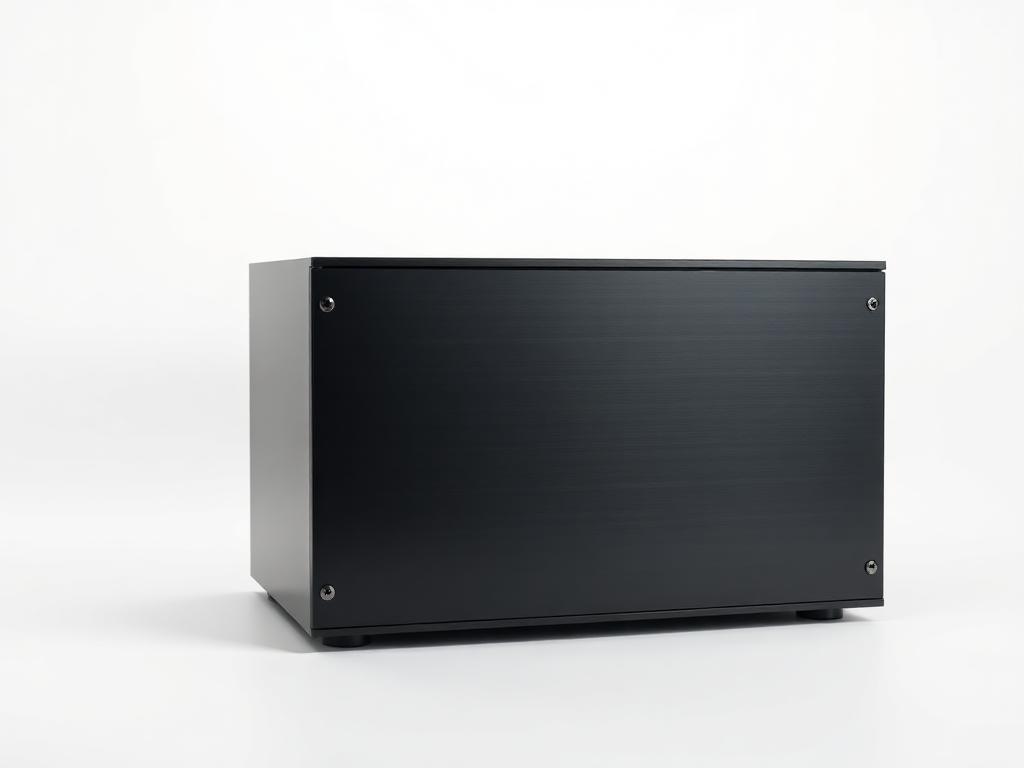
 Home + Business
LiFePO4 5kWh 48V Battery
5.1kWhStackable 5kWh lithium battery — long cycle life, safe chemistry.
Retail
₦1,250,000
Compare available products and retail prices. Request a quote for your location or bulk order.
5 products
Home + BusinessStackable 5kWh lithium battery — long cycle life, safe chemistry.
CommercialHigh-density 10kWh wall-mount lithium battery for commercial backup.
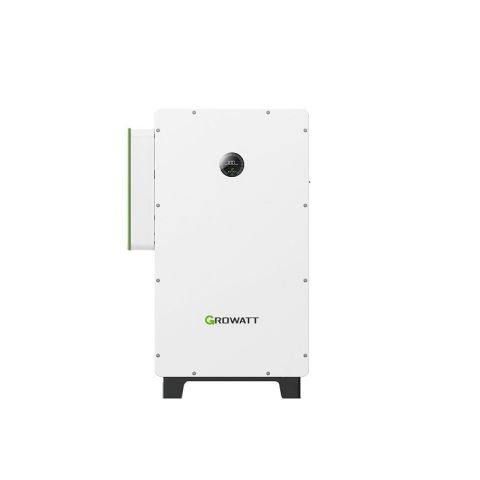 Home + Business
Engineered for West African climates, this 10kWh LiFePO4 battery offers 6000+ cycles, smart BMS protection, and seamless Growatt inverter integration for reliable B2B/B2C power.
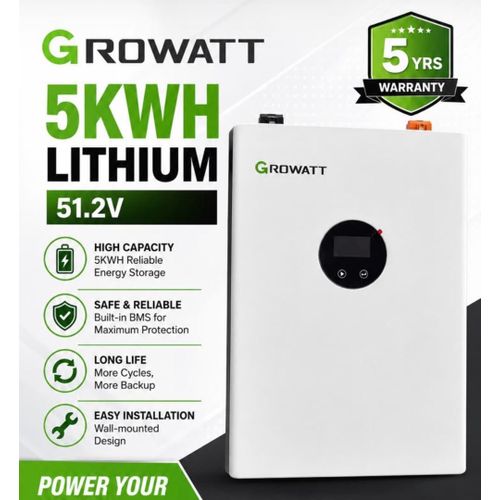 Home + Business
The Growatt 5kWh 51.2V 100Ah LiFePO4 battery is a high-density, tier-one lithium storage solution engineered for superior cycling stability and seamless integration with SPF off-grid inverters.
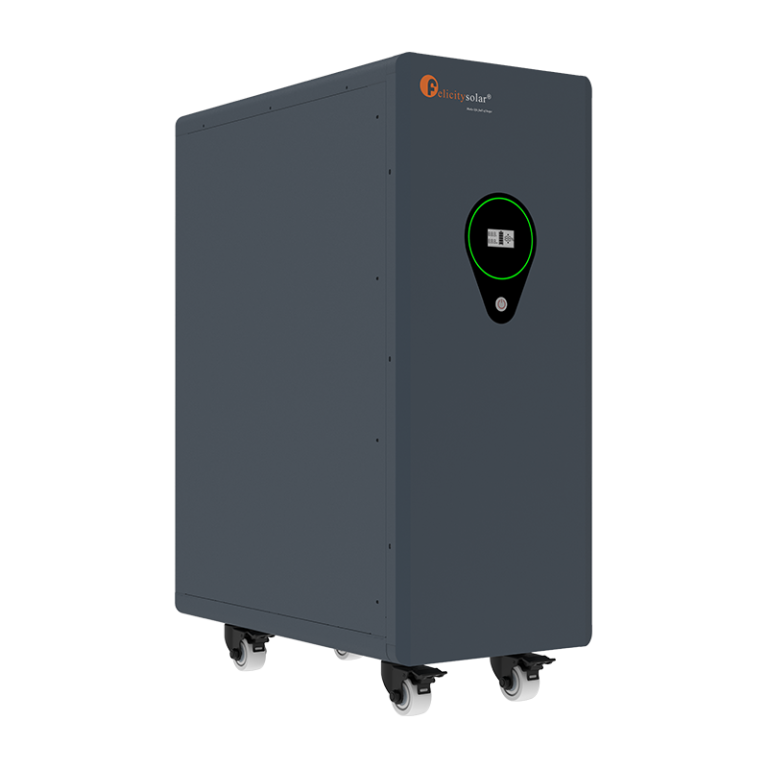 Home + Business
A high-capacity 25kWh LiFePO4 battery designed for long-duration backup and diesel displacement in large West African residential and commercial solar installations.
Buying guide
Lithium iron phosphate, or LiFePO4, batteries store energy for use when solar production or grid supply is unavailable. For solar buyers in Nigeria and Ghana, choosing a battery means balancing usable energy, discharge power and inverter compatibility. A capacity label does not by itself guarantee a particular overnight runtime.
Battery capacity may be listed in amp-hours or kilowatt-hours. To make an approximate comparison, multiply nominal voltage by amp-hours and divide by 1,000 to obtain kWh. Use the manufacturer's stated energy figure where available. Nominal stored energy is not the same as usable AC energy: reserve settings, permitted depth of discharge and inverter losses reduce what reaches your appliances.
Estimate daily backup energy by multiplying each appliance's power by its operating hours, then adding the totals. A 200W load running for five hours needs about 1kWh before system losses. Refrigerators and air conditioners cycle, so measurements are preferable to assuming continuous nameplate consumption. Allow a sensible reserve and discuss charging opportunities before selecting the final battery size.
A battery can store ample energy yet still be unable to deliver the power demanded by a large inverter. Check continuous and peak discharge-current limits, BMS protections and allowed parallel connections. At a given voltage, higher load power requires higher current. Cables, terminals, fuses and isolators must be selected for the resulting current and the installation conditions.
Match battery voltage and operating range to the inverter, and confirm an approved communication protocol where required. Battery expansion should follow the manufacturer's guidance on model matching, firmware and state of charge. Avoid casually mixing lithium packs or pairing new and old equipment without a documented compatibility assessment.
For a home in Lagos or Accra, first decide which circuits must remain powered overnight and whether grid or solar charging will be available the following day. A shop or clinic may need a different reserve because refrigeration, communications or other essential loads cannot be interrupted. Select storage from measured demand rather than assuming a standard home package fits every building.
Install batteries in a dry, suitable location within the manufacturer's temperature range, with secure mounting and protected terminals. Confirm warranty conditions, service arrangements and the information needed for a claim. Cycle-life figures depend on test conditions, temperature and depth of discharge; they should not be converted into a guaranteed number of service years.
Choose NGN or GHS using the site's currency selector. Where a price is not listed, request a quote. Confirm stock, delivery costs, included equipment and warranty terms for your location before placing an order; retail equipment prices do not imply a complete installed system.
For a complete installation, explore our solar bundles or use the system estimator as a starting point for your load list. See our Lagos solar service and Ghana solar service pages for local project enquiries. Commercial buyers can discuss requirements through our business solutions page.
Calculate essential-load energy for your desired backup hours and account for usable capacity and losses. The right number depends on consumption, discharge limits and how the bank can be recharged.
A replacement requires compatible voltage, charging settings and protection. Confirm the inverter supports the proposed lithium battery and any required BMS communication before connecting it.
Electrical compatibility depends on the system, not the country alone. Confirm your inverter, installation conditions, delivery location and applicable warranty support in your quote.
Send your preferred product, quantity, location and system requirements to Maypatronic.
Enquire on WhatsApp